Skip to content
 McCartney and the Aston Martin: the debunking comes from the workshop
Every legend that lasts long enough receives updates, like an operating system. In the latest version of the story of the "replaced" Beatle, the alleged death has a precise location: the wheel of his Aston Martin. And the debunking, this time, comes not from a laboratory but from a workshop on the outskirts of Milan. We know the basic theory: Paul McCartney supposedly died in an accident in the Sixties and the other Beatles replaced him with a lookalike so as not to lose the band. Over time the legend has been enriched with details, and this is where the car comes in: an elegant British sports car from the Sixties, once owned by the musician, named as the scene of the tragedy.
>
 Marijuana and paraquat: the weedkiller that crashed America
This time we start from a true story, a rare thing in this column. In the Seventies a weedkiller sprayed on illegal plantations in Mexico found its way, by roundabout routes, onto the American black market, and triggered a national panic. From then on truth, alarmism and rumour got tangled up like the cables behind a desk. We are in the thick of the so-called war on drugs. Mexico was one of the main producers of cannabis bound for the United States, and with American backing a campaign began to destroy the crops from the air: helicopters spraying the fields with herbicides. For cannabis they used paraquat, an extremely powerful, non-selective weedkiller, in other words one of those that do not ask any plant for permission.
>
 Valentine's Day banned: real news, hoax or romantic firewall?
Every February, as punctual as a system update, the news arrives: somewhere in the world they've banned Valentine's Day. No hearts, no chocolates, no flowers. The headline is irresistible, and that's exactly why it should be handled with gloves: sometimes it's true, sometimes it's half true, sometimes it's a legend with an updated calendar. In February 2011 several newspapers reported that the authorities of Belgorod, a region in western Russia, had decided not to promote Valentine's Day in public and official settings, considering it a festival foreign to local tradition. The same articles, however, spelled out one crucial detail: in private, everyone could celebrate however they liked.
>
 The red suitcase that always arrives first: the carousel mystery
Every traveller knows the wait in front of the baggage carousel: the fixed stare, the hope, someone else's holdall going past for the tenth time. From this comes one of the tastiest airport legends: the red suitcase that always comes out first, alone, mysterious, and then nothing for twenty minutes. The story began with a traveller's letter to a major daily newspaper in 2010. He said he had noticed several times, at Milan Malpensa airport, a red suitcase with no tags that appeared on the carousel as the first item of luggage, starting the delivery time clock. After it, nothing. According to the reader, when the suitcase was opened it contained only old magazines and packing material.
>
 Bison and bat-men on the Moon: the hoax of 1835
In 1835 a New York newspaper announced that the Moon had prairies, bison, unicorns and men with bat wings. People believed it, copies flew off the stands and the competition went mad. Viral marketing was not invented by digital agencies: it was invented with lead type and ink. The New York Sun, at the time a small paper, began publishing a series of articles presented as extracts from a Scottish scientific journal. The protagonist: John Herschel, one of the most famous astronomers of the day, who really was in South Africa, at the Cape of Good Hope, for his observations.
>
 Benkei, the monk of a thousand duels who let nobody pass
Before firewalls there was Benkei. A Japanese warrior monk stationed on a bridge, with a single rule: nobody gets through here. History remembers him as a real man, legend as a demigod, and the gap between the two versions is the beauty of the tale. Benkei lived in the twelfth century and served Minamoto no Yoshitsune, one of the most celebrated commanders in Japanese history. Reliable information about him is extremely scarce: almost everything comes from romanticised chronicles, theatre and folk tales written down long afterwards. It's the classic profile with three lines of verified data and two hundred pages of medieval fan fiction.
>
 The Tremonzelli tunnel and the mystery of engines that cut out
For years, in Sicily, a rumour has circulated about a tunnel on the motorway between Palermo and Catania: inside it, people say, engines cut out by themselves and then start up again. It's the road version of the computer that only restarts when the technician isn't around. Let's look at what people say and what is known. The tunnel is the Tremonzelli, on the A19. According to the accounts, some drivers felt their engine cut out and saw their headlights dim for a moment, only to find everything back to normal a few seconds later. These are scattered reports, collected over the years by word of mouth and a few news articles, later joined by the interest of mystery enthusiasts and UFO groups.
>
 The Hook: the hoax that doubled as a car alarm
A young couple in a car, a lonely road, the radio interrupting the music for a chilling announcement. If you already have a shiver running down your spine, the Hook legend has done its job: it's one of the most shared horror stories of all time, and it has never needed a single real protagonist. Two teenagers park up in a country lane. The radio warns that a dangerous escaped convict is on the loose in the area: you can recognise him because instead of one hand he has a hook. She gets nervous, hears noises, wants to go home. He huffs, but in the end drives off abruptly, sulking. When they arrive, he gets out to open her door and finds, hanging from the handle, a hook.
>
 Razor blades on water slides: the legend that cuts every summer
Every summer, as punctual as the first update after the holidays, the story returns of the razor blade glued to a water park slide. A boy launches himself, a scream, the water changing colour. And it always happened to a friend of a cousin, down at the seaside. The plot is always the same, and it is built like a short film:
>
 The five-headed snake: the hoax that went round the web
At some point news began to spread online of a five-headed snake discovered in India, on a university campus. Photos, shares, excited headlines. The only missing detail was the snake. The images going round were actually of two kinds: one showed a sculpture made by an artist, and the other was a photo montage made with an editing program. No real animal, no scientific discovery. Just good craftsmanship and a bit of digital creativity, mistaken for news.
>
 Bob Dylan's motorcycle crash: the most talked-about reboot
In the summer of 1966 Bob Dylan, at the height of his fame, comes off his motorcycle near his home and disappears from public life for a long time. No concerts, few appearances, information in dribs and drabs. And when an artist goes offline without a status message, word of mouth fills in the empty field by itself. These were turbulent years for him. The move from acoustic to electric sound had split his audience: some old fans saw him as little short of a traitor. Exhausting tours, constant pressure, enormous popularity. Against that backdrop, a sudden break was bound to look suspicious to anyone hunting for a hidden story.
>
 Immortal hoaxes: the ones that survive every debunking
News goes off like yoghurt. Hoaxes, on the other hand, are like those programs that reinstall themselves at every reboot: you delete them, you empty the recycle bin, and the next day they are back, with a bigger icon. Here is a selection of the most stubborn. Spreading a false story takes a minute. Debunking it takes a week, a source, an expert and a lot of patience. And often it is not enough: people who study the psychology of communication have repeatedly observed that a correction can reinforce, in those who already believed, the very idea it was meant to dismantle. Like pressing "delete" and getting a backup copy.
>
 The beer that moves by itself: ghost or bar-top physics?
An old English hotel, centuries of history, rumours of night-time presences. Then a video: a glass of beer sliding across the table by itself, falling and breaking. The web instantly splits between those calling the ghostbusters and those calling a plumber. I, as a sysadmin, call physics. In 2010 a clip went round online, filmed in a historic hotel in Gloucester, England. On the table, a full glass moves slowly, without anyone touching it, until it topples over. Obligatory side dishes: tales of apparitions, strange noises, creaking doors, and even a paranormal investigation agency at work.
>
 The “cursed” phone number: how a rumour is born
In 2010 newspapers across half of Europe picked up a story from Bulgaria: a phone operator had stopped assigning a mobile number after three of its holders, one after another, had died. Within hours the news had already become a legend: the “number of death”. It's worth pausing for a moment, because here the victims are real, and the legend is everything else. According to reports at the time, the number was one of those sequences of identical digits, easy to remember and therefore sought after. Over roughly a decade it had passed to three different people, who died in tragic and differing circumstances: one from illness, two in violent incidents. After the last death the number remained inactive and was eventually suspended.
>
 Is Michael Jackson alive? Anatomy of a rumour that won't die
Michael Jackson died on 25 June 2009. A few weeks later, part of the internet had already decided it was not true. It is not the first time this has happened to a star, and it will not be the last: when grief is great, the denial of death spreads faster than any patch. In the days of the memorial service, a long-standing friend of the singer, someone Jackson had helped for years, appeared on a well-known American talk show to remember him. His face bore the marks of severe burns suffered as a child.
>
 Haunted roads: when the satnav says “recalculating spectre”
There are roads where, according to word of mouth, the problem is not the traffic but the unregistered passengers. Hitchhikers who vanish, ladies in white who cross the road, lorries that appear out of nowhere. The satnav does not flag them, but online they have more reviews than a Michelin-starred restaurant. Legends of haunted roads follow a standard format, like a configuration file copied from one site to the next:
>
 Hanako-san, the ghost who keeps the school toilet engaged
Every school has a toilet that's always out of order. In Japan, according to a legend that is hugely popular among pupils, the reason is simple: it's engaged. By a ghost. For decades. Without ever flushing. Her name is Hanako-san, “Miss Hanako”, and she lives in school toilets. The most commonly cited address is the third cubicle of the girls' toilets on the third floor, but every school has its own version, just as every office has its own cursed printer. The ritual for contacting her: knock three times, call her by name and ask if she's there. If she is, a thin little voice answers yes.
>
 Roopkund, the skeleton lake that rewrites its own log
At around five thousand metres, in the Indian Himalayas, there is a small glacial lake that stays frozen for much of the year. When it thaws, human remains surface along its shores: hundreds of people. It is Roopkund, which the papers renamed Skeleton Lake, and it is one of those cases in which legend and science have had to work in the same room. The remains were noticed in the Forties by a forest ranger. At first, with the war in full swing, people even thought of soldiers who had died recently. Then of a military expedition from past centuries trapped by the cold. Each hypothesis was a first version of the software: launched with enthusiasm, corrected in the next release.
>
 The Well to Hell in Siberia: traceroute of a hoax
Some hoaxes last an afternoon and some survive for decades without a single security update. The “Well to Hell” belongs to the second category: a team of geologists drills so deep that they hear the screams of the damned. Spoiler: the only thing screaming was the microphone of imagination. Siberia, the Eighties. A team of scientists digs down for kilometres, lowers a heat-resistant microphone and, instead of the rumble of the Earth's crust, records human screams. The temperatures are infernal, in both the technical and the theological sense. In an even more spectacular variant, a winged creature emerges from the hole and vanishes into the night.
>
 Central Park and the vanishing rabbits: error 404, rabbit not found
Every so often a news story seems tailor-made to become a legend. In 2010 some news agencies reported a little New York mystery: the rabbits that, thanks to an unfortunate custom, have ended up in Central Park after Easter for some years could no longer be seen. No witnesses, no clues, no one claiming responsibility. Just a park with far fewer rabbits than expected. The story started from a widespread habit: families giving their children a rabbit for Easter and then, once the holiday is over, “releasing” it in the park. In the following years, however, those rabbits seemed to have vanished. The experts consulted put forward different theories, and not all of them agreed:
>
 The curse of Macbeth: the name actors never type
In the theatre there's a title nobody says out loud, like a password you never write on a sticky note. Actors call it “the Scottish play” or “that show”, and if someone lets the real name slip, an emergency procedure kicks in worthy of a data centre. Welcome to the curse of Macbeth. The superstition holds that naming Macbeth inside a theatre, outside the performance itself, brings trouble to the company: accidents, illness, collapsing sets, savage reviews. The most widespread legend about its origin claims that Shakespeare used real witchcraft spells in the witches' scenes, earning himself an eternal curse. No historical evidence supports this: it's the typical source code attributed after the fact to a famous author.
>
 “My Way” in Philippine karaoke: how a curse is born
In the Philippines a rumour has been circulating for years: singing at karaoke a famous song made a hit by Frank Sinatra supposedly brings serious trouble. Behind that rumour there are real news events, with real victims, and that's why it deserves to be discussed with respect. The interesting question isn't whether the song is cursed, but how the idea that it is comes about. Several news reports, international ones included, have over the years described violent incidents breaking out in Philippine karaoke bars while someone was singing “My Way” specifically. The matter became so well known that some bars, it's said, removed it from their song list, and many amateur singers prefer to avoid it. The number of cases is unclear and varies depending on who reports it.
>
 Thirteen science myths to uninstall right now
Science has its urban legends too, and they're the sneakiest because they turn up wearing a lab coat. They sound like facts, they get quoted at dinner with a knowing air, and they're wrong. Here are thirteen known bugs, each with its patch. The problem with these legends isn't that they're false: it's that they seem true because they contain a little bit of science. It's the same trick as the best viruses, which disguise themselves as system files. The antivirus is always the same: ask who measured it, how, and whether anyone checked. If the answer is “I read it somewhere”, the file goes into quarantine.
>
 University legends vol. II: exams, professors and other campus viruses
Before social media, university hoaxes travelled along corridors, past the coffee machines and across newsgroups, at the speed of a worm on a network without a firewall. Every university in Italy swore the story had happened right there, to a roommate's cousin. Here is the second volume: same virus, new variants. The university legend has a precise architecture. There's no central server: there's a peer-to-peer network of students living away from home, each of whom downloads the story, tweaks it a little and reshares it with their own city in the “location” field. So the same scene takes place in Bologna, Pisa, Cagliari and Turin, often in the same academic year, sometimes on the same afternoon.
>
 University legends: the transcript that flew from the third floor
Every Italian university has a professor who threw a student's transcript book out of the window. Everybody knows it, a friend saw it, it was the third floor. The problem is that the same book apparently flew simultaneously in Catania, Padua, Turin and Bologna: either it is a book with the gift of bilocation, or it is a legend in multicast. University is the ideal incubator for legends: every year new freshers arrive, with no antivirus and full of anxiety, and every year the older students upload the same stories again to the central server, also known as the faculty café. At the end of the Nineties many of these were collected in newsgroups devoted to urban legends, with a list of the cities where each one had definitely been seen. Very long lists. Which is exactly the proof that it had not happened anywhere in particular.
>
 The boss's letter: a joke wearing a fake ID badge
For years a letter has been bouncing around online that a reader supposedly sent to the letters page of a major newspaper. It tells of a birthday gone wrong in the most embarrassing way possible. It's a joke, but it turns up in a suit and tie, with an important masthead as the sender: a hoax wearing a fake company ID badge. An executive has a birthday. At breakfast nobody wishes him many happy returns; his family all seem to have forgotten. At the office, however, a colleague remembers, takes him out to lunch and then, with a knowing look, invites him round to her place. Convinced he's understood everything, he makes himself very comfortable indeed. A door flies open and in come his wife, children, friends and a cake with candles: it was a surprise party. And there he is in the middle of the living room, dressed for the sauna, in his socks. The letter ends with the protagonist blaming, naturally, the colleague.
>
 The most absurd teacher's notes: true, chain letter or classroom legend?
Every September, as punctual as the update that starts just when you need to print, the collection of “the most incredible notes written by teachers” reappears. Everyone swears they're real, copied from genuine class registers. The trouble is that they've been swearing it since before there were phones to photograph them. Collections of school notes are a genre of their own: sentences in the bureaucratic jargon typical of the Italian class register, where teachers formally log pupils' misdeeds, applied to surreal situations. Pupils simulating space travel, classes on strike invoking the Constitution, bribery attempts with fake banknotes from a board game. Every year the list changes title, “the best of last year”, “the best of this year”, but many of the sentences stay the same, with the date updated.
>
 Elvis has left the building, the legends have not
Elvis Presley died in 1977, at Graceland. The legends about him, however, are in excellent health and keep multiplying like the open tabs in a stressed user's browser. Every August, as punctual as an automatic update, they all come back. There are famous people and there are legendary people. Elvis went straight into the second category, skipping the system requirements. For decades his figure has been surrounded by true anecdotes, half-truths and pure inventions, mixed together in one big archive with no index. It is the ideal condition for urban legends: so much authentic material that even the fake stuff becomes credible.
>
 The British big cat: real panther or labrador in disguise?
The British have officially peaceful wildlife: no lions, no venomous snakes to worry about, at most a lake monster in Scotland to liven up tourism. And yet for decades, among hills, woods and suburbs, word has spread of an unexpected guest: a big black cat, a sort of panther, said to roam free in the countryside. Big cat sightings follow a very stable format, like a pre-filled form:
>
 Celebrity legends: when fame becomes a hoax server
If an urban legend is a virus, a famous person is a server with a million users connected: one rumour and contagion is guaranteed. Gossip about celebrities is as old as fame itself, and it all shares one feature: it spreads much faster than the denials. Before we get to the famous, let's remember the anonymous classics: the bloke who wakes up minus a kidney in a bath full of ice, the tourist who has a mysterious adventure and finds only an unsettling note. Stories with no names, no dates, always told by somebody's cousin. Add a well-known face to that structure and the legend upgrades from the free version to premium.
>
 The gassy incident in the car: a legend with an audience
Some legends are frightening, others make you think. This one only makes you blush, and that is why it is immortal. It is the story of the perfect embarrassment, the one each of us dreads living through, told as if it happened to a friend's girlfriend. She and he are expected at an extremely smart party. The whole day spent between the hairdresser, clothes and new shoes. In the evening he comes to pick her up, opens the car door for her like a true gentleman and closes it again.
>
 The rock angel on the Moon: anatomy of a space hoax
A few years ago a story was going round online fit to make the telescopes tremble: in a sample of Moon rock brought back by the Apollo missions there was supposedly a small angel-shaped sculpture, two hundred thousand years old, shown once and then made to disappear. It is a hoax. But it is a hoax built so well that it deserves a post-mortem. The tale had all the right ingredients. An alleged scientist who had supposedly worked for decades at the American space agency, now retired and finally free to speak. A shiny, silvery object, made of a metal said to exist only on the Moon. A spectacular dating. And the grand finale: the discovery kept secret to avoid worldwide panic.
>
 The Pope and the alien of Castel Gandolfo: a rumour with no signature
Among the most curious legends going round online there is one with an exceptional cast: a much-loved pope, a summer garden and a visitor from very far away. It is said that in 1961 John XXIII met an extraterrestrial at Castel Gandolfo. It is said. And that is where the antivirus's work begins. The most widespread version says that a glowing craft landed in the gardens of the pontiff's summer residence. A figure of almost human appearance, wrapped in light, supposedly stepped out, and the pope spoke with it for a good quarter of an hour. At the end he is said to have uttered a phrase about universal brotherhood, without ever revealing anything more.
>
 Is Paul McCartney dead? The clues, the album covers and the believers
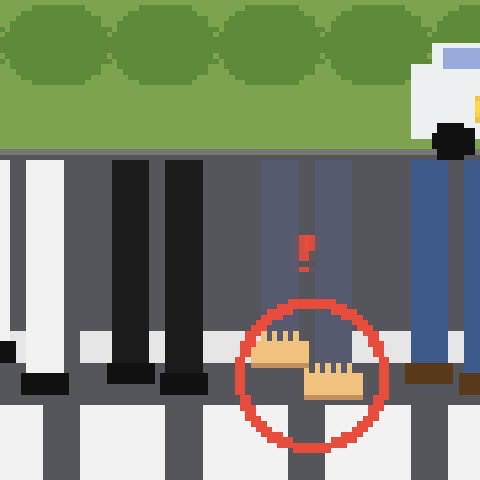
The legend says that Paul McCartney died in the Sixties and was replaced by a lookalike. Reality says that Paul McCartney went on writing, recording and touring for decades. But the legend has one huge advantage over reality: it has clues. According to supporters of the theory, the other Beatles hid messages in the album covers, like developers leaving an Easter egg in the code. The most cited is the photo on the most famous zebra crossing in the world: he is the only one barefoot, he is out of step, and on a car parked in the background there is a number plate in which someone chose to read a reference to his age.
>
 Famous faces in reflections: pareidolia breeds hoaxes
In the summer of 2009, a few days after the death of Michael Jackson, an English motorist told the papers he had seen the singer's face reflected on the bonnet of his car, in a photo taken to sell it. The story went round the world in a matter of hours. The face, looked at properly, was a cloud. The phenomenon has a name: pareidolia. It's the brain's tendency to see familiar shapes, especially faces, in random images: clouds, damp patches on walls, plug sockets, slices of toast. It's facial-recognition software installed as standard, optimised never to miss a face, even at the cost of seeing a few too many.
>
 “Paul is dead”: how the legend of the replaced Beatle began
If there were a chart of the longest-running urban legends, this one would be permanently on the podium: Paul McCartney supposedly died in a car crash in the Sixties, and ever since a lookalike has taken his place. It is false. But the story of how it spread is a perfect case study, worthy of a cybersecurity manual. Scattered rumours of an alleged accident were already circulating in the preceding years, but the legend proper exploded in the autumn of 1969 in the United States. First a few articles in student newspapers, then phone-ins on a Detroit radio station, where listeners and presenters set about hunting for "clues" in the records. Within a few weeks the story was everywhere.
>
 If everything is an opinion, the hoax always wins
There's an idea that's very popular online: all points of view are equal, everyone has their own truth, and anyone who asks for evidence is a killjoy. It looks like open-mindedness. In reality it's a door left open, and urban legends walk in through it without even wiping their feet. Imagine a server where anyone can write anything, and where every file is worth exactly as much as every other. The technical manual weighs the same as the next-door neighbour's comment. After a week you can't find the manual any more. The comment, on the other hand, has been copied into hundreds of folders.
>
 Grand Canyon: when news becomes legend too quickly
Not every legend is born from a prank. Some are born from a true and painful event, which the headlines turn into a mystery before anyone even knows what happened. This piece is about that very mechanism, and it makes no jokes about the person involved. In 2009 news agencies reported that a car had plunged from a viewpoint at the Grand Canyon, in Arizona, and that the driver had died. The park authorities spoke of an ongoing investigation: the circumstances were unclear and the case had not been classified in any way.
>
 Immortal legends: the malware that survives every reformat
Some stories never die: you debunk them, you quarantine them, you format the disk, and three weeks later there they are again in your aunt's inbox. They're the classic urban legends, the most stable software humanity has ever written. Zero updates, full backward compatibility from the payphone to the group chat. A well-made legend always has the same digital signature. The person telling it wasn't there, but the source is “utterly reliable”. There are several versions, and each swears it's the original. The opening is always the same: a friend told me that.
>
 The secret perfect wave and the catalogue surfer: two legends
Every surfer has a friend who knows a friend who has surfed the perfect wave, in a secret bay, reachable only after days of desert. Nobody ever has the coordinates, nobody ever has the photos. It's the most beautiful legend in the sport, and like all beautiful legends it runs better without evidence. The perfect-wave story works like a private network: to get in you need the right password, and nobody will tell you the password. All anyone knows is that it's behind a headland, that it's always breaking, that the wind is always favourable and that there's always someone who went there “the week before it got famous”.
>
 The Bogeyman: the oldest legend, still in beta
The Bogeyman has no face, no address, and has never left a single fingerprint. And yet he has kept generations of children in line through the power of his name alone. He is the oldest and most efficient legend ever written: zero bytes of content, total distribution. Every region has its own: the Bogeyman, the black man of Italian nurseries, the monster under the bed, the one who carries off children who don't finish their soup. The key feature is vagueness. Nobody knows what he looks like, where he comes from or what exactly he wants. All anyone knows is that he comes if you throw a tantrum.
>
 Clint Eastwood, son of Stan Laurel? A coincidence promoted to scoop
Every so often Hollywood produces a film. More often it produces a legend. One of the most imaginative claims that Clint Eastwood, the toughest face in westerns, is really the son of Stan Laurel, the famous Stan of Laurel and Hardy. The taciturn cowboy and the king of gentle comedy: on paper it is an irresistible crossover; in reality it is a hoax. The rumour rests on two pillars, both made of plasterboard:
>
 Walt Disney frozen? Rumours and legends about the dream maker
When someone builds an empire by telling fairy tales, sooner or later people start telling fairy tales about him. It happened to Walt Disney, the lord of cartoons, around whom word of mouth has built a little theme park of rumours. Some are so widespread that many people consider them facts. Let us run a virus scan. Walt Disney was born in Chicago in 1901, grew up between town and countryside in the Midwest and started working in commercial art, where he discovered animation. With his brother Roy he founded a studio that, after difficult years and a few commercial disappointments, achieved enormous success, helped by the arrival of sound in cartoons. Feature films followed, crises, recoveries and finally the great theme park project. He died in December 1966.
>
 Legends in a nutshell: the coffee-break hoax cheat sheet
Some urban legends are novels. Others are telegrams: one line, an exclamation mark, and off to the next coffee break. This is the collection of compressed versions, the .zip files of word of mouth, with the antivirus scan already attached. Old collections of legends often closed with a threat: if you don't believe it, something terrible will happen to you. I'm closing the other way round. Anyone who doesn't believe these stories is right, and wins a free antivirus. It's called doubt: it never expires, it doesn't slow your computer down and it doesn't ask for your credit card.
>
 Exam legends: the barometer, the columns and Carnot's bicycle
Every university has a secret archive that is not in the library: the exam stories handed down from one year to the next. Nobody has seen them, everybody swears they are true, and every faculty claims they happened right there. It is the first peer-to-peer distribution system in history: no central server, just freshers passing files to each other. The professor asks how to measure the height of a skyscraper with a barometer. The student suggests lowering it on a string and measuring the string. Not good enough. So he drops it and times the fall. Not good enough. Then the pendulum, then the shadows in the sun. Finally the definitive solution: give the barometer to the caretaker in exchange for the height of the building.
>
 The diver scooped up by a water bomber: a legend from the sky
A scuba diver is swimming peacefully near the coast. A moment later he finds himself on top of a burnt hillside, in wetsuit, fins and tanks, utterly dazed. A firefighting plane supposedly scooped him up while loading water and then dumped him on the flames. A friend of my cousin told me, which as a source is about as reliable as a website without a certificate. The legend travels the whole world, and in every country the diver changes lake, sea and hill. Sometimes he's dead, sometimes alive and confused, sometimes found hanging from a tree. The common thread is the image: the man in a wetsuit in the middle of a charred forest. An image so absurd it must be true, because “who could ever make that up?”. Answer: anyone, after dinner.
>
 SVV, if it goes it goes: the mystery item at the bottom of the bill
A friend told me, who heard it from his cousin, who was almost there: in a restaurant in some never-specified holiday resort, a mysterious item appears at the bottom of the bill. SVV, followed by an amount. No explanation, no key, just three letters and a figure. A curious customer calls the owner over and asks what it means. He, with the most innocent air in the world, replies: "Se va, va", which is Italian for "if it goes, it goes". In other words: if the customer pays without reading, fine; if they notice, never mind, it comes off and no hard feelings.
>
 A CD on the dashboard against speed cameras: a reflected legend
Once upon a time people hung lucky charms, red horns and little mascots from the rear-view mirror. Then, at some point, CDs appeared. Not to listen to: to blind the speed camera. So says the legend, at least, which turned an installation disc into a technological talisman. Believers are divided into two currents, almost like religious denominations of electronics.
>
 University legends: heard in Genoa, sworn to in Padua
The most famous exam stories have one curious feature: at the end they always carry a note in brackets. "Heard in Genoa." "Attributed to Professor T." "Told by two lecturers of the time." It is their certificate of authenticity, and it is worth as much as a padlock drawn in felt-tip on the address bar. In IT a certificate exists to guarantee that whoever is talking to you really is who they claim to be. In university legends the certificate is a bracket: a city, a faculty, at most a lecturer's initials. Enough to seem precise, too little to be checked.
>
 Health and hazards: the hoaxes that circulated before Wi-Fi
Before social media, health hoaxes travelled by photocopy. Faded, crooked, with an illegible stamp and the inevitable request: “Please pass this on.” It was spam on paper, and it worked better than the real thing. These legends share common firmware: a danger hidden in an everyday object, an authority quoted at random and an order to forward. They are chain letters in a white coat. The best part is that nobody has ever met the author, just like the mysterious colleague who set up the network printer in 2009.
>
 Macabre tales: the archive of chills nobody has ever checked
Every group of friends keeps a secret archive of stories that freeze the blood. Nobody knows who uploaded them, nobody has ever verified the checksum, and yet they've been running for decades without a single crash. I've collected them here, with the appropriate safety notes. First rule of macabre tales: they never happened to the person telling them. They happen to a friend's cousin, a colleague's brother, a lady from a nearby village whose name nobody remembers. It's a source with no SSL certificate: the browser of reason shows the broken padlock, but we click “proceed anyway” because the shiver is worth the risk.
>
 Sex and cheating: the legends told with the lights off
Every town in Italy has its own racy story, and the curious thing is that it is always the same story. The name of the nightclub and the province change, but the script stays identical, like a virus that recompiles itself in every city with the local settings. Today we open the most embarrassing folder in the archive, wearing gloves and with the lights on. Years ago, during an evening with friends, one of us told a very explicit medical tale about an eighteen-year-old girl in a nightclub in his town. A second corrected him: no, it happened at a birthday party near Milan. A third swore it had happened in a school toilet in Rome. We fell silent, like three servers discovering they have the same IP address.
>
 Unlikely offers: free mobile phones and dodged phone bills
Before spam there was the whispered promise: collect this, dial that, forward it to ten people and you'll receive a prize. The prize never arrived, but the promise did, to everyone. Here are the longest-running unlikely offers, from cardboard tokens to mobile phones. Every generation has had its mysterious collection. Stamps, tokens hidden at the bottom of packets, barcodes, foreign number plates noted down in a notebook by the roadside. The rules were always the same: nobody knew how many you needed, nobody knew whom to hand them to, nobody knew what you'd win. But everyone was certain there was a prize.
>
 Urban bestiary: animals that exist only by word of mouth
Animal legends are the oldest viruses on the human network: they were spreading long before the internet, never needed a modem and update themselves every time they're passed on. Here is a selection from our zoo of hoaxes, with the technical data sheet and, where needed, the antivirus. A cow is struck by lightning on a desert road and lands on the bonnet of a passing motorist. No take-off form, no control tower. The story has been doing the rounds for decades in a thousand versions, and it has the classic legend structure: faraway place, nameless protagonist, cartoon physics. That a cow can end up on a car in a road accident sadly does happen; that it gets there by air is another matter. It's the classic data packet that leaves from a mundane fact and arrives at its destination with three plugins too many.
>
 Exam legends: the professor, the barometer and a cousin's friend
Every university in Italy has its own exam legend, and every exam legend happened in Genoa, Pisa or Florence, always to a friend of a cousin. Nobody was there, everybody tells it the same way. It is the first peer-to-peer protocol in history: no central server, just freshers passing the file around in the canteen. The exam legend has a fixed structure, like a pre-printed form. A strict professor. A student who is either unprepared or a genius. A punchline nobody would dare deliver in front of a real examining board. The mark, if there is one, is always 18 or 30 cum laude, the bare pass or the top mark: the middle ground generates no traffic.
>
 Assorted legends: polite thieves, mortadella and the anti-fine Nokia
Some legends travel alone and some travel in bundles, like the drivers on the printer CD. This is the full bundle: eight stories told by friends of cousins of colleagues, all with the same guarantee as an attachment called invoice.pdf.exe. A couple have their car stolen outside their home. Two days later the car reappears in its spot, washed, with a note of apology and two tickets for the opera. Touched by such good manners, the pair go to the theatre. When they get back they find the house emptied down to the last teaspoon.
>