Skip to content
 The end user's revenge: when tech support gets it wrong
For years we've laughed at end users. Fair enough, but that's not the whole story. Because every now and then it's the user who calls support, and from that moment the roles are reversed: he becomes the technician, and the end user, for once, is right. The office router is flashing red. I open the provider's chat. I'm greeted by an enthusiastic virtual assistant, with a puppy's name and three emojis in a row.
>
 End User #7: the notification, the remote and the cat in the meeting
Tech support isn't a job: it's a civil emergency service for people who have just discovered they own a computer. This is the seventh collection of real cases. Real in the sense that I saw them, and I never lie before nine in the morning. Tuesday morning a customer rings me. Grave voice, like a public service announcement: “A message has appeared on my computer. I don't know what it wants.” I ask him to read it to me. Silence. Then: “Ah. It says update available, click to update. Right, I'll click. Thanks, eh.”
>
 End User 6.0: tech support strikes again
I thought that with smartphones, the cloud and artificial intelligence the end user would evolve. And evolve they did. Like viruses: more resistant. Here is the new version of our bulletin, revision 6.0, with bug fixes nobody asked for. A user stuck a USB stick into the laptop's network port. He pushed. Hard. When I asked “why?” he replied proudly: “It was the only free hole.” The stick lives there now. It transmits no data, but it keeps the cable company, and the cable is gone.
>
 End user, episode 5: the saga continues
I worked on a help desk phone line for eight months. Then I fled, but I still hear the voices, at night, when the router blinks. This is the fifth episode of the end user saga: a mysterious being, kind, determined, and always convinced that the technician can see their screen down the phone. EU: Good morning, we need to do a video call but on one computer the webcam doesn't work and on the other the microphone doesn't work. Can we move the microphone from one to the other?
>
 End User #4: semi-serious dispatches from the helpdesk front line
Every technician has a drawer. Not the cable drawer: the one for support requests that can never be filed, because no ticketing software has a category called “miracle”. Today I'm opening it. With gloves on. A lady writes to me: “The menu on my phone scrolls, but without conviction.” I ask if it freezes. No. If it's slow. No. Three emails later I discover the scrolling is perfect, but she'd like it “more elegant, like figure skating”. I closed the ticket as an aesthetic-existential issue. She gave me four stars. She took one off for the skating.
>
 End User #3: the saga continues, and nobody can find the Start button
The end-user saga never ends, like updates and Monday meetings. Here is a new collection of episodes from the front line. Names have been omitted to protect the innocent. And the guilty too, who are often relatives. My aunt has a very precise idea of a home: everything must be in its place, preferably in a drawer. One day she looks at my router with disgust and asks: “Do those little lights have to be on all the time?” I explain that yes, otherwise no internet. She thinks about it. Then: “What if you switched it off at night and back on when you need it? Like the iron.”
>
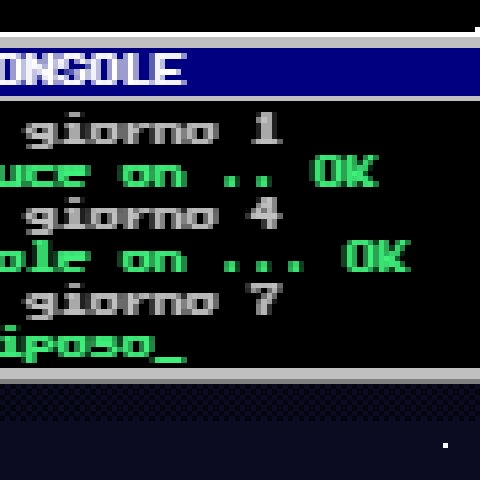 Creation in the system logs: six days at the console
Every sysadmin, sooner or later, wonders what the first big project in history would have looked like if it had been done from the command line. This is the system log recovered, with respect and a bit of imagination, from a very, very old disk. No data was lost: it's just that nobody had invented backups yet. > login creator
>
 “You work with computers, don't you…”: a survival guide
There is one sentence that makes every IT person tremble more than a ticking hard disk: “You work with computers, don't you…”. It isn't a question. It's a summons. This is the survival guide for anyone who hears it coming, usually at a dinner, usually at dessert. Once upon a time they'd stop you in the town square. Today you get a voice note lasting four minutes and twelve seconds. The first three minutes are about the weather, an aunt and a parking space. Then, towards the end, the decisive sentence: “Anyway, never mind, I'll send you a photo”.
>
 The Real Programmer, part two: habitat, rituals and habits
The Real Programmer isn't a profession: he's a protected species. He lives in captivity in offices, feeds on cold coffee and reproduces by copy and paste. This is the second chapter of his user manual, to be kept near the router. The Real Programmer doesn't do simple things. Ask him for a contact form and he'll deliver a framework for contact forms, with documentation coming soon.
>
 End user: testimonies from the tech support front
Every technician has a drawer where he keeps the stories nobody believes. I have three, and the third one won't shut any more. This is the official collection of testimonies from the front: all told across the counter, all sworn to, none verifiable. On Christmas Day a technician's phone ought to be switched off. Mine was on because I was using it as a torch to look for the sticky tape. It rings. A calm voice wishes me a merry Christmas, then adds: “My new television is wishing me a merry Christmas in Korean. Is that normal or is it a virus?”
>
 End User: impossible requests, smartphone edition
Anyone who works in IT knows the problem isn't fixing the computer. The problem is understanding what's being asked of us. Here is a collection of impossible requests, listened to with a smile and transcribed with a trembling hand. Faced with the screen “create a password of at least eight characters, with a capital letter, a number and a symbol”, a customer thought long and hard and then asked: “Can I use Password1!? That way I'll remember it.” Then, after a pause: “But don't tell anyone.”
>
 Social networks: thanks, but I'd rather live
Every week someone asks me how to become famous on social media. I always give the same answer: you switch off the phone, leave the house and wait for the village to talk about it. In the provinces it has worked for centuries and has never once asked you to accept the new terms of service. Once upon a time, to find out what was new, you went to the newsagent. Today you watch tutorials. Yesterday I watched one called How to save a photo from social media: fourteen minutes, three intros, a mattress sponsor and, at minute twelve, the revelation. Right click, save. I applauded on my own in the kitchen. The cat didn't understand but gave it a like.
>
 End user #1: a field guide to the average PC user
For years I have studied the end user in its natural habitat: the desk with the password post-it stuck to the monitor. It is a gentle, curious creature, convinced that the computer hates it personally. This is my field guide, compiled with the rigour of a naturalist and the patience of someone waiting for an update stuck at 99%. The end user is so called because it arrives at the end of everything: after the engineer who designed the processor, after the programmer who wrote the software, after the technician who installed the lot. It arrives last, double-clicks where a single click was needed, and in four seconds discovers a defect that no testing had ever foreseen.
>
 The 12 digital blunders we've all made (or nearly)
The internet is the most efficient system ever invented for distributing information. Especially the information you didn't want to distribute. Here is the chart of the twelve most widespread digital blunders, compiled after years of tech support and other people's embarrassment (and a bit of my own). 12. Creative autocorrect. You write to a client “thank you for your patience” and the phone decides you meant “thank you for your parents”. The client replies: “You're welcome, they've been together since 1987”. From there the conversation never recovers.
>
 A mechanic, an electronics engineer and a sysadmin break down
Three friends are driving along a country road on a foggy evening: a mechanic, an electronics engineer and a sysadmin. Halfway there the car, a brand-new model with more software than bolts, dies. Without a sound. Like someone who has decided to stop taking part in the conversation. The mechanic gets out, opens the bonnet, sniffs. “It's the clutch. Or the pump. Either way, it's something you can smell.”
>
 Care and maintenance of your desk mouse: instructions in translation
I received the manual for a cheap mouse, translated by someone who clearly didn't know that a computer mouse is not a rodent. They translated everything accordingly. I report the most important parts here, because I believe anyone who owns a mouse should know how to look after it. Congratulations on purchasing your new desk mouse. The mouse is an intelligent, quiet pet, devoted to the cursor. If treated with respect, it will live long on your desk and will not nibble your documents. If treated badly, it will get stuck in a corner of the screen and refuse to come out.
>
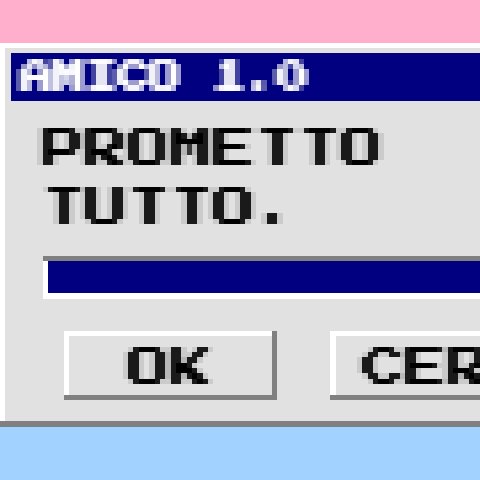 Promise Buddy 1.0: the software that always says yes
Keep up with the times. Here comes Promise Buddy 1.0, the software that solves no problems but makes you feel as if it already has. It installs in just a few clicks, even if you don't click. Promise Buddy 1.0 installs itself in place of old, outdated programs such as Honest Quote 2006, Realism Professional and Let's Revisit When Things Calm Down 3.1. It doesn't ask permission: it takes it for granted, with a smile. At the end of the installation a window appears saying “Done!”. It doesn't specify what.
>
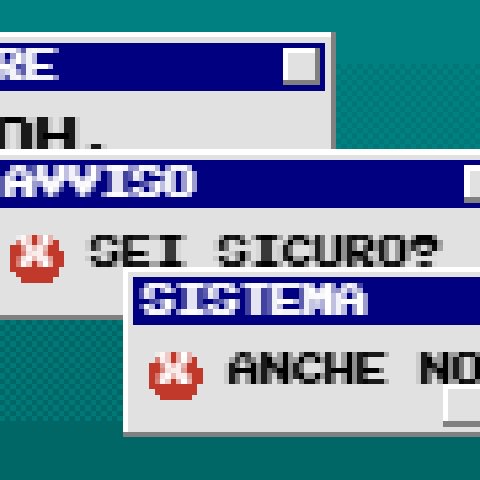 System messages your computer thinks but never says
Error messages are the official language of machines: polite, mysterious, always with an OK button that solves nothing. But behind every little window lies a more honest thought. Here is an unauthorised translation, gathered over years of listening carefully to cooling fans.
>
 Shock confession: the operating system was a joke
At a press conference that made servers tremble across half the world, the three fathers of the BRONIX operating system and the Q programming language have admitted everything: it was a joke. A joke that lasted forty-five years, and somebody built the banks on top of it. Disclaimer: news, characters and products are invented. The curly brackets, sadly, are not.
>
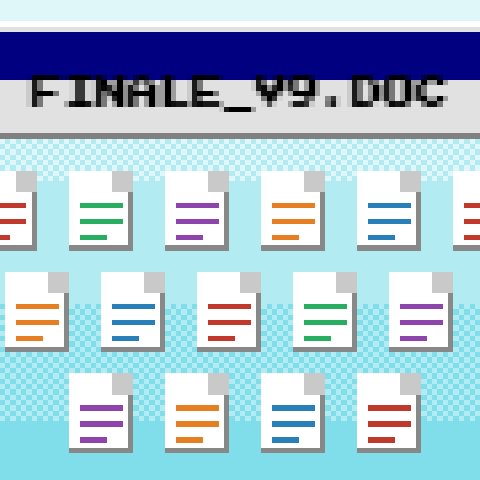 Digital contraceptives: the suite that stops files multiplying
Files reproduce. Everyone knows it, nobody says it. You start with one document and a week later you have report_final, report_final_DEFINITIVE and report_final_DEFINITIVE_this_one. That's why a major software house has unveiled the first contraceptive suite for documents. It's called NoCopy Suite 365 and it promises to solve the oldest problem in office computing: the uncontrolled proliferation of versions. The press release talks of “responsible control of document descent”. At the launch, the marketing director showed a shared folder with two hundred copies of the same quote and said, his voice breaking: “Never again”.
>
 Is Windows a virus? A scientific investigation (more or less)
Every so often someone at the counter asks me, in a low voice: “Is Windows a virus?”. It's a serious question and deserves a scientific answer. So I carried out a comparative study, with rigorous method and a great deal of coffee. At this point in the investigation the hypothesis seemed confirmed. I had even drafted the press release.
>
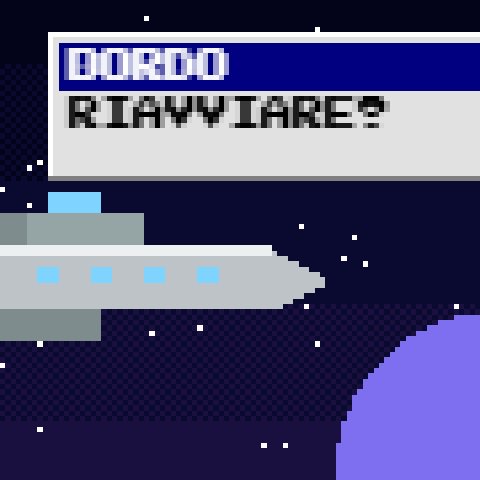 Ship's log: the starship that installed the operating system
Space is cold, dark and infinite. But nothing, in the whole galaxy, is more merciless than a dialog box asking “Are you sure?” while an asteroid is heading straight for you. This is the ship's log of the star cruiser Perseverance, on the day Command decided to update the on-board computer. Interstellar Command has supplied us with the new operating system Fenestra 98. They say it's more modern, more stable and has nicer wallpapers. First Officer Velmar, who has two brains and no patience, is overseeing the installation. I made the coffee. By hand, to be safe.
>
 User-proof: (almost) true stories from tech support
They say software should be “user-proof”. Anyone who works in support knows it's like building a waterproof dam: you try, you pour in all the concrete in the world, and the water always finds a new and creative way through. Here is a collection of calls received by various technicians, myself included, with names left out out of affection. A gentleman calls because the program asks him to press “any key” and for forty minutes he has been searching the keyboard for the Any key. He found Ins, End, PrtSc, even the key with the little window on it. No Any. He concluded that his keyboard was missing it, and wanted to know whether, under warranty, they send it separately.
>
 The lost manager and the sysadmin: a true story, almost
A manager gets lost in his car in the flat farmland of the Po Valley, between a maize field and another, identical maize field. The satnav keeps repeating “recalculating” in the voice of someone who has stopped believing. By the roadside stands a man with a rucksack full of cables: he's a sysadmin, and nobody called him. The manager winds down the window.
>
 Tech delirium: 36 symptoms that digital has taken over your life
Tech delirium doesn't arrive all at once. It arrives in packets, like updates: one day you say good morning to the fridge, the next you ask your mother for a read receipt. I have compiled a clinical list of symptoms. Tick them off calmly, nobody's watching. Except your phone.
>
 Windows Update source code leaked (maybe, almost, as a parody)
Last night, at the bottom of a drawer, under a bundle of IDE cables and a video rental membership card, I found a floppy disk with NEVER OPEN written on it in marker pen. I opened it immediately. Inside was what appears to be the secret code that decides when your PC updates. I am publishing it for the good of humanity and of my own curiosity. This is, of course, a parody. No real code was read, copied or mistreated. The floppy was empty: I dreamed the code. But it was a very detailed dream, with curly brackets.
>
 Is the computer a relative? Ten clues for and ten against
At the bar downstairs the Thursday-night dispute is always the same: is the computer part of the family or not? After three laced coffees and a heated discussion about the Wi-Fi, we gathered the evidence. I present the case file with the gravity a matter of state deserves. After lengthy deliberation, the bar tribunal ruled that the computer is an in-law: you didn't choose it for love, but it's family now, and at Christmas someone has to buy it a present. Usually a new charger.
>
 Jokes about the computer, our worst enemy
We have a complicated relationship with the computer. We love it, we hate it, we threaten it under our breath and then apologise when it starts up again. Here are a few little stories to let off steam while the update finishes. On a small plane are the pilot, an IT consultant, a manager, a sysadmin and an intern. At a certain point the pilot stands up: “I've got good news and bad news. The bad news is we're about to crash. The good news is there are four parachutes.” He puts one on and jumps.
>
 The day Murphy was right about everything
Murphy's laws usually turn up one at a time, politely, like relatives at Christmas. That Tuesday, though, they all arrived together, by coach. This is a faithful account of the day, reconstructed from the logs and from one eyewitness, who is me. I switch the laptop on at two minutes to eight because at eight I have an important video call. The laptop, which for three weeks had had nothing to say, chooses that moment to inform me it is installing an update. Twenty-three per cent. I speak to it gently. It stays at twenty-three per cent out of respect.
>
 You know you're a slave to your smartphone when…
Once upon a time, to be addicted to the internet you had to hear the modem whistle. Today all you need is a pocket. Here is a little test, to be taken in silence, preferably with the phone in another room. If you recognise yourself in more than five points, don't worry: you're normal. That's what's worrying. There is a therapy, simple and free of charge. It's called “leaving the phone at home”. The first ten minutes are hard: your hand goes to your pocket on its own, like a conditioned reflex. Then something strange happens. You lift your head. You see trees, people, a dog that has no profile. You breathe.
>
 Cohabitation 1.0: installation manual for two administrators
Cohabitation 1.0 is not a program: it's a distributed operating system, with two administrators and no manual. You install it with enthusiasm, convinced it's a free upgrade. Then you discover that yes, it's a free upgrade, but every feature is a surprise. Dear support team, since installing Cohabitation 1.0 I have noticed some behaviour not documented in the brochure.
>
 The Real Programmer: a field identification guide
The Real Programmer is a protected species. Not by law: by the fact that nobody dares touch his code. This guide will help you identify him before it's too late, that is, before he retires and leaves you a management system written in a language that no longer even has a Wikipedia page. It used to be easy. Whoever talked to computers was a programmer; everyone else called the programmer. Today even the oven has a computer, the fridge suggests recipes and my cousin says he's a developer because he asked an AI to build him a website for his hens' eggs. The website works. The hens don't.
>
 If Windows were a car: the driver's manual
Many people wonder what would happen if the people who make operating systems started building cars. I wonder it every morning, when the office PC greets me with “We're getting a few things ready for you”. So here is a little driver's manual, written with the love of someone who has spent half his life in front of a progress bar. I say it with affection: we've all been driving this car for thirty years anyway, and we can get it going again blindfolded. Still, every now and then, when I see a cyclist go by smiling without waiting for any update, a thought crosses my mind. Then the PC asks me to restart, and the thought goes away.
>
 If tech companies built the toaster
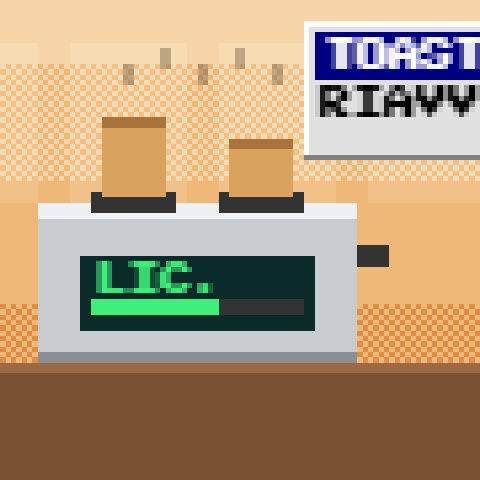
The toaster is the most honest object in the kitchen: bread goes in, toast comes out. No registration, no account, no updates. I wondered what would happen if it were designed by the tech companies. I haven't slept since. But I did take notes. The toaster costs nine pounds. Compatible slices, eighty-two. It only accepts genuine bread with a chip in it, and if you try the loaf from the baker round the corner it warns you that “toasting quality may be compromised”. Every so often it refuses to toast because the yellow slice has run out. You wanted plain white toast. Doesn't matter.
>
 40 computer puns to tell in meetings (at your own risk)
I've collected forty computer jokes, all field-tested in meetings. The testing went terribly: such a silence fell over the room that the server temperature dropped by two degrees. I'm publishing them in the interests of energy saving. If nobody laughs in the meeting, don't be discouraged. Say it was a load test. The audience held up. You, less so.
>
 A computer classification of office colleagues
After years of tech support I've realised one thing: people in an office behave exactly like software. Some update themselves, some ask for a restart, and some have been running in compatibility mode for twenty years. Here is the official classification, approved by a committee made up of me and the coffee machine. The sysadmin, of course, fits into no category. The sysadmin is the operating system: nobody sees him, everybody runs on top of him, and if one morning he isn't there, suddenly nothing works. Tributes accepted in the form of croissants.
>
 20 programmer excuses for when the program doesn't work
The programmer doesn't make mistakes: he is misunderstood by the universe. When the program breaks in front of the client, the programmer doesn't panic. He opens his repertoire. Here is the chart of the twenty most used excuses, collected over years of meetings with a projector that won't switch on. And the excuse that wins every year, unbeaten, celebrated in the corridors of every technical office in the world:
>