Bison and bat-men on the Moon: the hoax of 1835
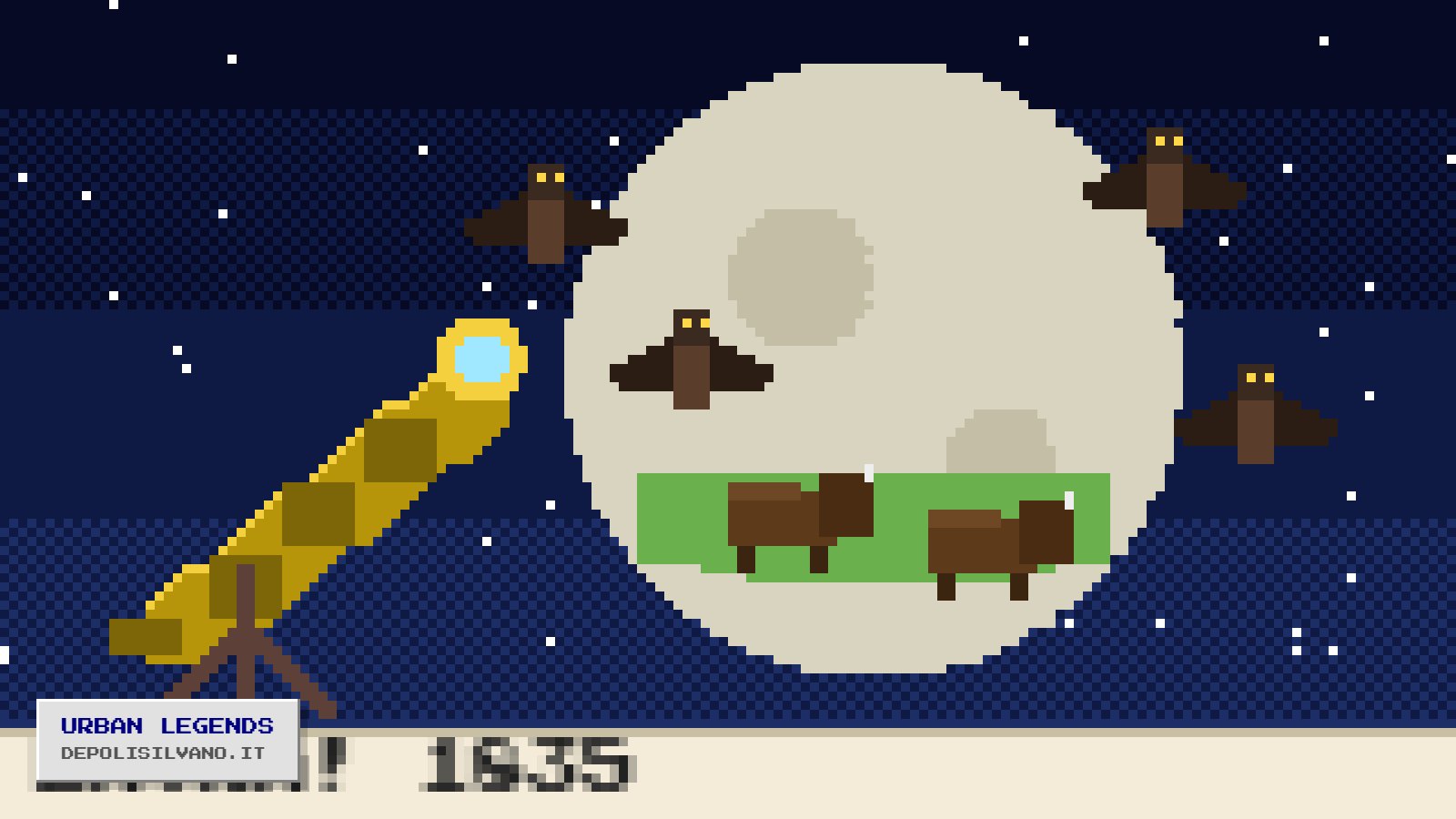
In 1835 a New York newspaper announced that the Moon had prairies, bison, unicorns and men with bat wings. People believed it, copies flew off the stands and the competition went mad. Viral marketing was not invented by digital agencies: it was invented with lead type and ink.
A press release with a telescope
The New York Sun, at the time a small paper, began publishing a series of articles presented as extracts from a Scottish scientific journal. The protagonist: John Herschel, one of the most famous astronomers of the day, who really was in South Africa, at the Cape of Good Hope, for his observations.
According to the paper, Herschel had built a colossal telescope capable of seeing the lunar surface in detail. The articles were packed with technical explanations about lenses and illumination. It is the same technique as startup press releases: the more technical specs you include, the fewer questions people ask.
The catalogue of lunar fauna
Instalment after instalment, the Moon filled up like a video game that has just received an expansion pack:
- seas, prairies and lush vegetation;
- animals resembling bison and strange creatures with a single horn;
- furry intelligent beings who knew how to use fire;
- and finally the “bat-men”, refined, winged, with temples and the life of country poets.
Every article ended by promising further revelations. The cliffhanger, the real one, was born here. All that was missing was the “Next episode in 10 seconds” button.
The signature without a certificate
The articles were signed by an alleged assistant of Herschel's. Shame that the assistant did not exist, and that Herschel knew nothing about it. The journalist usually named as the author of the hoax is Richard Adams Locke, a science enthusiast who worked at the Sun itself.
Herschel, so the story goes, took it with good humour at first. Then less so. In the end he was tired of having to explain at every public occasion that he had never seen any bat-men. I understand him: I am still explaining to a client that I never promised him internet “with no wires and no electricity”.
The propagation
The news crossed the ocean and was translated and reprinted in Europe. In Italy too, pamphlets with the translations circulated, and true to the urban legend manual each copy added some new detail. It is the typical behaviour of a virus that mutates with every infection: the Italian version was already an unofficial patch.
There were also the first fact-checkers. Among them was the writer Edgar Allan Poe, who criticised the articles and claimed they copied one of his own stories. But the public preferred lunar bison to reasoning. A phenomenon that, sadly, has never received a corrective update.
The commercial result
The Sun saw its sales grow enormously and, according to accounts, kept much of its readership even after the hoax had become clear to everyone. It proves that a hoax can be exposed and still be an excellent investment. A lesson that, judging by certain headlines today, some people have learnt all too well.
Why it worked
At the time the possibility of life on the Moon was genuinely discussed by scholars and philosophers, and nobody could go and check. There was no antivirus: no probes, no close-up photographs, no missions. Today we know that the Moon has no atmosphere, no prairies and no bison. We went there in person, and the bat-men did not show up for the appointment.
Moral: when a story arrives with too many technical details and no source you can check, the telescope to point is the one at the sceptic inside us. It has fewer lenses, but it sees perfectly well.
Loosely based on an old piece from the teneraerbetta.it archive