Is Paul McCartney dead? The clues, the album covers and the believers
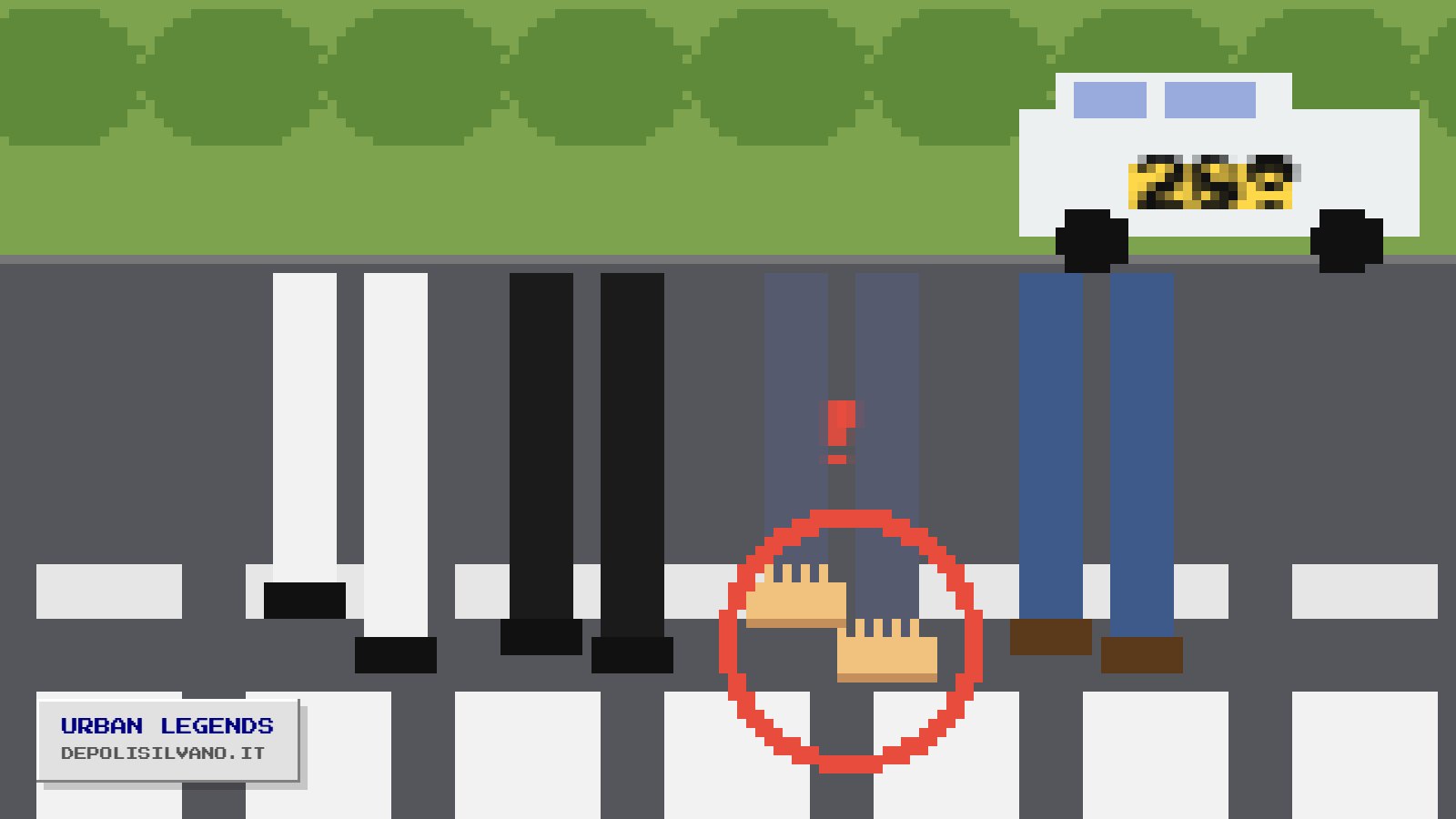
The legend says that Paul McCartney died in the Sixties and was replaced by a lookalike. Reality says that Paul McCartney went on writing, recording and touring for decades. But the legend has one huge advantage over reality: it has clues.
The treasure hunt on the album covers
According to supporters of the theory, the other Beatles hid messages in the album covers, like developers leaving an Easter egg in the code. The most cited is the photo on the most famous zebra crossing in the world: he is the only one barefoot, he is out of step, and on a car parked in the background there is a number plate in which someone chose to read a reference to his age.
Then there are records played backwards, details in the inner photos, hand gestures, flowers, shadows. Each element, taken on its own, has a mundane explanation: it was hot, the photographer chose the best shot, the car belonged to someone in the neighbourhood. Lined up together, they become a screenplay.
The brain, that search engine
Our brain is programmed to find patterns. It is extremely useful for recognising a face in a crowd, less useful when it finds faces in plug sockets. When you start from a conclusion and look for evidence, you always find it: it is like searching for "error" in a server's logs. Something will certainly turn up, even if the server is running perfectly.
Psychologists call it confirmation bias: we notice the evidence in favour and ignore the evidence against. And the biggest piece of evidence against, in this case, has been walking on stage and singing for more than half a century.
The analysis that does not close the case
In 2009 the legend returned to the papers thanks to an article in a technology magazine: two Italian experts had used biometric methods to compare photographs of the musician taken before and after 1966, and had noticed some differences. The result was reported as "the doubt remains".
But be careful about what that means. These comparisons speak of compatibility, not certainty. And comparing photos taken years apart, with different lenses, lighting, angles and print quality, of a face that is ageing in the meantime, is an extremely delicate exercise. I compared my driving licence photo with my ID card and concluded that one of the two is a lookalike. I still do not know which.
Why it is so much fun to believe
The lookalike theory has lasted so long because it is a game. It harms nobody to believe that album covers hide messages: it is a puzzle, a collective treasure hunt, a reason to listen to a record again looking for one more detail. It is like those video games with secret rooms: they do not change the plot, but they keep you there for hours.
The problem only arises when the game stops looking like a game. A legend told as a legend is folklore. Told as the truth, it becomes disinformation with a soundtrack.
The antivirus verdict
- The death in 1966: never happened.
- The lookalike: a character in the legend, not in history.
- The clues: coincidences reinterpreted after the fact.
- Paul McCartney: alive, active, and probably fed up with the question.
Scan complete. No threats found, just a lot of imagination.
Loosely based on an old piece from the teneraerbetta.it archive