The five-headed snake: the hoax that went round the web
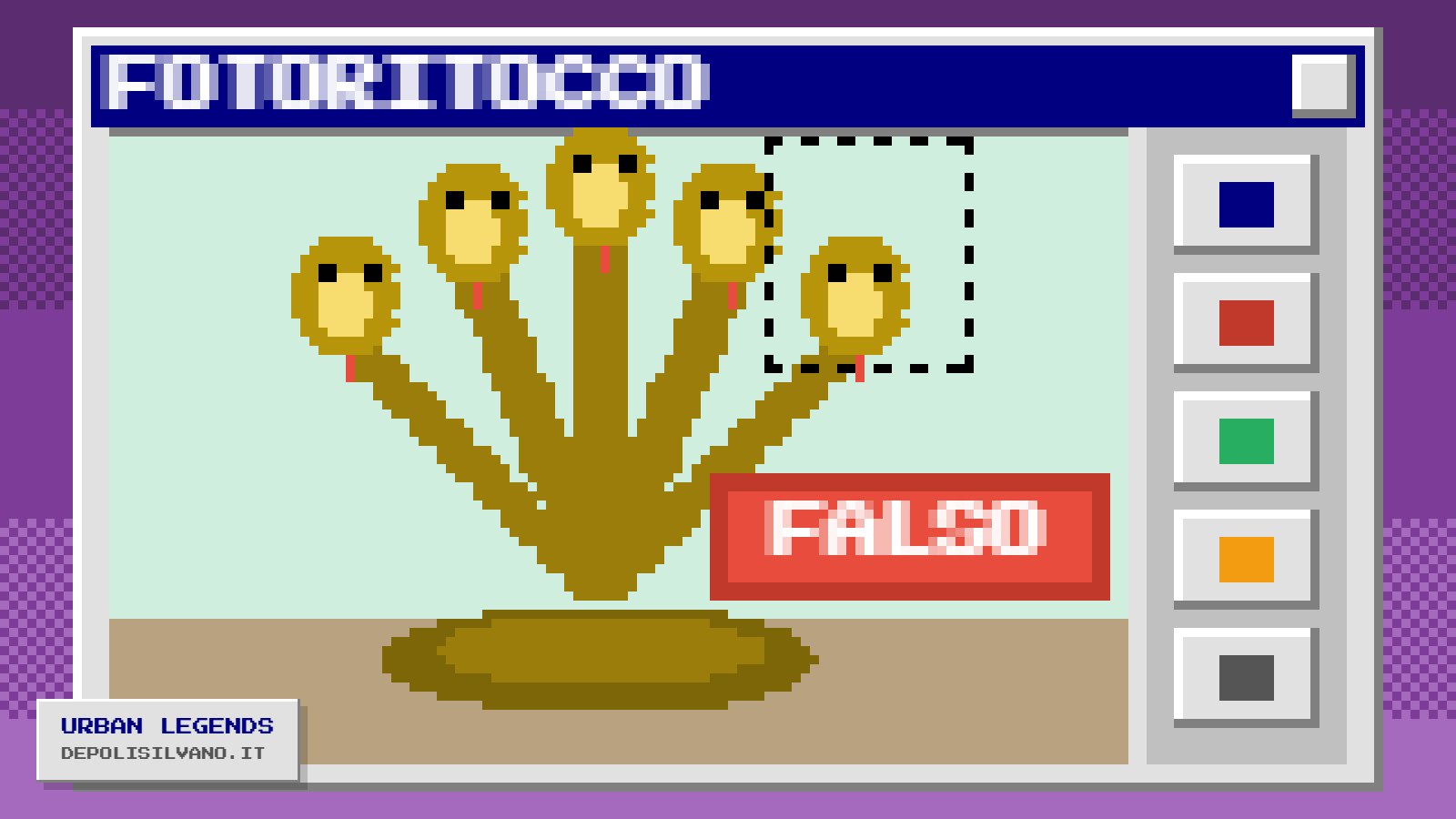
At some point news began to spread online of a five-headed snake discovered in India, on a university campus. Photos, shares, excited headlines. The only missing detail was the snake.
What it really was
The images going round were actually of two kinds: one showed a sculpture made by an artist, and the other was a photo montage made with an editing program. No real animal, no scientific discovery. Just good craftsmanship and a bit of digital creativity, mistaken for news.
Why it worked
The hoax had all the ingredients to go viral:
- a striking image, understood in a second;
- a faraway place, hard for readers to check;
- a cultural hook: in India the many-headed serpent holds an important place in traditional iconography, so the story sounded evocative;
- a precise detail, like the name of a campus, which gave the whole thing an official air.
It is the classic spam recipe: an irresistible subject line, a sender who seems credible, and an attachment that nobody actually opens before forwarding it.
The antivirus for hoaxes
My standard procedure, the same one I apply to emails announcing million-pound inheritances:
- Stop for a second before sharing.
- Look for the original source: if no scientific body or serious newspaper is talking about it, that is a sign.
- Look at the image with a critical eye: odd edges, inconsistent lighting, shadows going in different directions.
- Ask yourself whether it is too good to be true. It usually is.
The five-headed snake never existed, but its story is useful all the same. It reminds us that online the speed of sharing is always greater than the speed of checking. And that, if one day you really do see a snake with five heads, the main problem will not be photographing it. It will be deciding which of the five to look in the eye.
Loosely based on an old piece from the teneraerbetta.it archive