The Well to Hell in Siberia: traceroute of a hoax
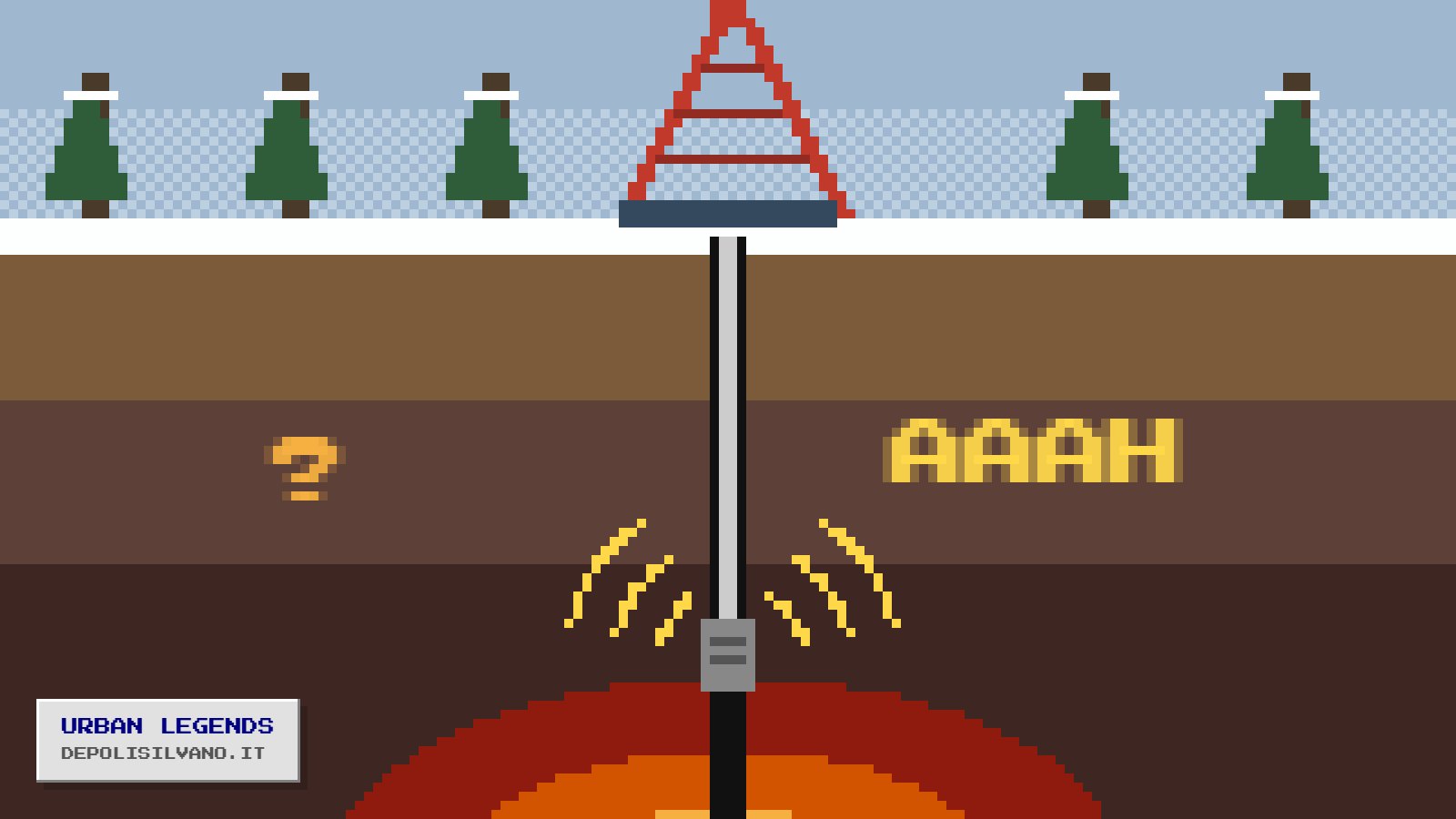
Some hoaxes last an afternoon and some survive for decades without a single security update. The “Well to Hell” belongs to the second category: a team of geologists drills so deep that they hear the screams of the damned. Spoiler: the only thing screaming was the microphone of imagination.
The story, standard version
Siberia, the Eighties. A team of scientists digs down for kilometres, lowers a heat-resistant microphone and, instead of the rumble of the Earth's crust, records human screams. The temperatures are infernal, in both the technical and the theological sense. In an even more spectacular variant, a winged creature emerges from the hole and vanishes into the night.
The tale has everything: state secrets, terrified scientists, a government that hushes it up. All it lacked was a “Subscribe to the channel” button.
The real hole
Let us start with the hardware. A very deep borehole in Russia really does exist: the Kola Superdeep Borehole, on the peninsula of the same name, drilled for scientific purposes and taken beyond twelve kilometres. For decades it was the deepest hole ever made by humans. Work stopped partly because temperatures were higher than expected and the drill could no longer cope.
The results of that drilling have been studied and published. No screams, no creatures: just rocks, trapped water and a great deal of patience. Which for a geologist, let us admit it, already counts as a thrill.
Traceroute of a legend
The best part of the story is not the story, but its route. Those who make a living debunking hoaxes did what I do when an email arrives from a suspicious sender: they looked at the headers. And a tortuous path emerged.
- An American religious television network relays the news, quoting a preacher.
- The preacher says he took it from a “scientific and respected” Finnish newspaper.
- The newspaper turns out to be a small newsletter of a religious community, which had taken it from a reader's letter to a daily paper.
- The reader had read it in another missionary newsletter, which in turn had fished it out of a Californian newsletter.
- There the trail goes cold. Timeout.
Each node in the network added authority without adding evidence. It is the classic packet that bounces between different servers and reaches its destination with a signature nobody has ever verified.
The packet signed “just kidding”
And the winged creature? That detail had come from a Norwegian reader who wrote to the broadcaster confirming everything. When a researcher tracked him down and asked whether he had any evidence, the answer was disarming: no, he had made that part up himself, to see whether anyone would check. Nobody had checked.
It is the moment when the malware confesses to being malware. It rarely happens, and it ought to be framed.
Why we believe it
The tale works because it combines two things that fascinate us: science going where nobody has ever gone and the mystery waiting for us down there. Everyone's faith, with all due respect, does not need a microphone in a Siberian borehole to stand up. And science does not need demons to be interesting: twelve kilometres of rock drilled through by hand, or nearly, is already an epic feat.
A sysadmin's moral
When a story arrives with “a scientific journal said so”, let us ask which one. If there is no name, or it changes at every step, the certificate has expired. The Well to Hell really exists, but it is a different one: it is where the hours go that we spend reading hoaxes instead of doing the backup.
Loosely based on an old piece from the teneraerbetta.it archive