Sex and cheating: the legends told with the lights off
Every town in Italy has its own racy story, and the curious thing is that it is always the same story. The name of the nightclub and the province change, but the script stays identical, like a virus that recompiles itself in every city with the local settings. Today we open the most embarrassing folder in the archive, wearing gloves and with the lights on.
One story, thirty addresses
Years ago, during an evening with friends, one of us told a very explicit medical tale about an eighteen-year-old girl in a nightclub in his town. A second corrected him: no, it happened at a birthday party near Milan. A third swore it had happened in a school toilet in Rome. We fell silent, like three servers discovering they have the same IP address.
That story, which there is no need to detail here, has been reported in dozens of places: from Sicily to Trentino, by way of half the province of Brescia. Fixed details: the girl's age and an extremely precise quantity of something. No name, no hospital, no medical report. It is the typical signature of a legend: exact numbers to look real, unknown protagonists so nothing can be checked. An SSL certificate drawn in felt-tip pen.
The altar as a courtroom
A great classic: two nights before the wedding, the groom drives past the new house, sees a light on, goes up to switch it off and finds his bride-to-be in the company of the best man. He says nothing. On the wedding day, in front of everyone, instead of saying “I do” he gives a speech. Then he invites the guests to the reception anyway, paid for by the father-in-law.
There are versions with the roles reversed and with swapped outfits, and the plot recalls certain old tales: it is a story that has been travelling the world for centuries, long before email. In practice it is a chain letter with a bouquet.
The call that dialled itself
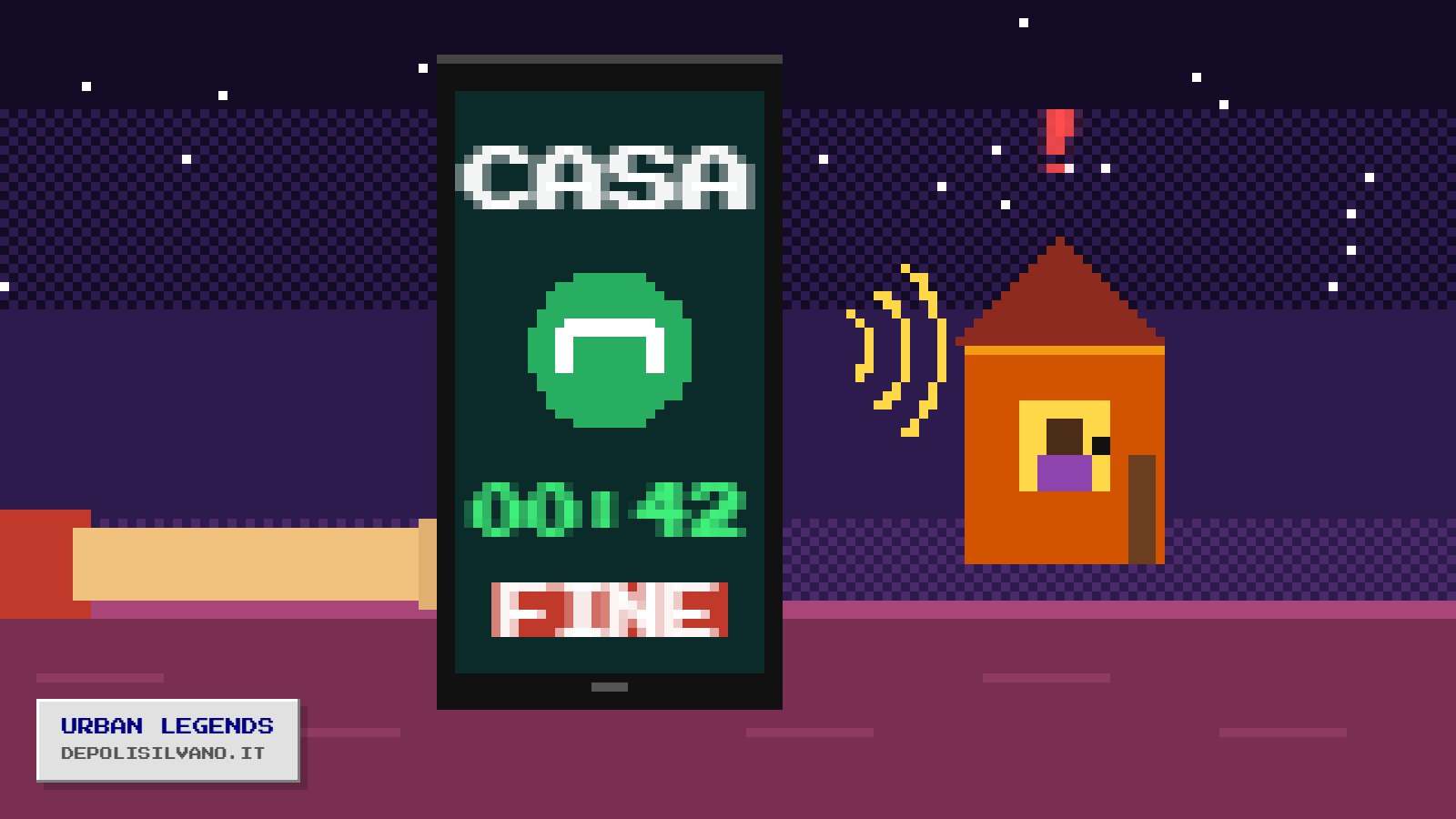
A gentleman, during a secret rendezvous, bumps his mobile with his elbow. Speed dial calls home. His wife listens live. Separation in record time.
This is the most modern legend in the group, and the most technical: it was born with memory keys and survived the arrival of the touchscreen. The real culprit is not the husband, it is the user interface. I have been claiming for years that the keypad lock has saved more marriages than couples counsellors.
The guest who takes everything
On New Year's Eve, a young man meets a charming stranger at a nightclub. He follows her back to her place. In the morning he wakes up alone: no girl, no clothes, no brand-new car that his dad gave him. The police shrug: he is not the first.
It is the romantic version of phishing. An offer too good to be true, one click too many, and when you wake up the only thing left on the system is the recycle bin.
The costume and the fireman
Another gem: a lover, dressed as a masked hero for carnival, attempts a spectacular entrance by leaping off the wardrobe. He misses the target, hits the headboard and passes out. The neighbours call the fire brigade. Among the firemen, naturally, is the husband.
The ending with the husband turning up right there is the trademark of the whole genre: the spouse plot twist. We also find it in the story of the couple who got literally stuck, carried to hospital under a tablecloth, where the surgeon on duty discovers he knows the patient very well indeed.
What is true
Medicine knows plenty of embarrassing situations and objects that ended up where they should not: A&E departments have anecdotes galore. But the versions in circulation are almost always impossible to trace, with details that change at every retelling and coincidences worthy of a penny dreadful. The case of the stuck couple, for example, is considered extremely rare, and the version with the surgeon-husband is pure plotting.
Why do they work so well? Because they combine three viral ingredients:
- embarrassment, which makes people tell them while laughing;
- punishment, which satisfies our inner moralist;
- proximity, because it always happens to a friend of a cousin, two towns away.
My advice, as a sysadmin: treat these stories like attachments from unknown senders. You can look at the preview, you can even laugh. But you do not forward them to your whole address book, and above all you do not run them.
Loosely based on an old piece from the teneraerbetta.it archive