University legends vol. II: exams, professors and other campus viruses
Before social media, university hoaxes travelled along corridors, past the coffee machines and across newsgroups, at the speed of a worm on a network without a firewall. Every university in Italy swore the story had happened right there, to a roommate's cousin. Here is the second volume: same virus, new variants.
The friend-of-a-cousin protocol
The university legend has a precise architecture. There's no central server: there's a peer-to-peer network of students living away from home, each of whom downloads the story, tweaks it a little and reshares it with their own city in the “location” field. So the same scene takes place in Bologna, Pisa, Cagliari and Turin, often in the same academic year, sometimes on the same afternoon.
The source is always him: the friend of the cousin. An unsigned, expired certificate issued by an authority nobody has ever seen. The browser of reason would show the red padlock, but at midnight, in a kitchen shared with six flatmates and a single clean fork, who checks certificates?
At university I once tried to trace one of these stories back to its origin. I followed eleven hops. At the eleventh, the cousin was me. Since then I don't tell anybody anything before ten in the morning.
The trick question, deluxe edition
The most widespread species is the professor who asks a seemingly trivial question and fails anyone who answers like a normal human being. It works like a security test: the system looks simple, but the way in is always somewhere else.
- The melting marble. Chemistry exam: is calcium carbonate soluble in water? The student confidently says yes. The professor dismisses him, inviting him to come back when the city's stone monuments have dissolved in the rain. Calcium carbonate does in fact dissolve only very slightly in pure water: the joke holds up, the true story who knows.
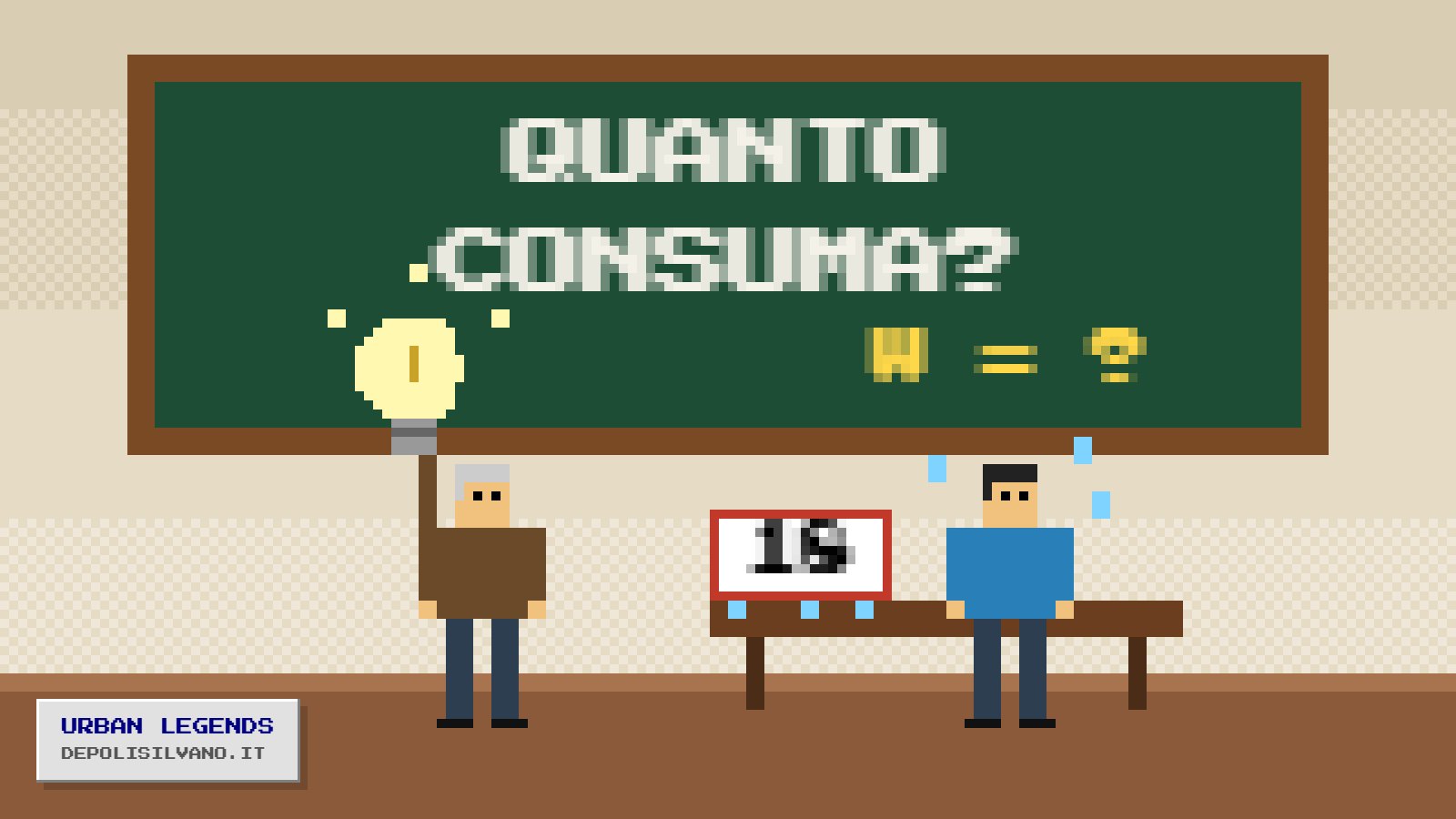
- The zero-consumption light bulb. The lecturer hands over a light bulb and asks how much it consumes. The student reads the wattage printed on the glass. Wrong answer: in his hand, off and unplugged, it consumes nothing. It's the same logic by which the office PC runs faster when nobody's looking at it. I believe it.
- The blunt-instrument key. Law faculty: a professor taps a key on the desk and asks what it is. “A key” is the answer that sends half the session home. Only those who say “a blunt instrument” pass, because in a law lecture hall even a bunch of keys has an open case file.
- The ballistic doughnut. Rational mechanics, breakfast at the lectern: the professor throws a pastry into the air and asks for an analysis of its motion. The legend doesn't say who caught the doughnut. I suspect gravity, which was always present at those exams.
Philosophy in demo mode
Philosophers have an advantage: their legends can be staged without equipment. All you need is a chair, a door and a student with quick reflexes.
There's the one about Zeno, the ancient thinker who denied that motion exists. The student, invited to refute him, stands up and walks. The professor appreciates it and asks him to keep refuting him: as far as the door, then down the corridor, then all the way home. There are two endings: in one he fails, in the other he gets top marks. It's the classic non-reproducible bug: it depends on the machine's mood.
Then there's the apple whose non-existence must be proven: the student eats it and innocently asks which apple they're talking about. And there's the bunch of keys that must be “proven” to belong to the lecturer: the student slips it into his pocket and walks out, and the professor's protest becomes the proof. These stories circulate almost identically across half the world, sometimes with a chair instead of the apple. It's the telltale sign of a legend: the script is fixed, only the actors and the fruit change.
The law does not forgive synonyms
Law faculties produce legends with the same precision with which they produce annotated codes. In one, the professor, delighted, gives his luxury watch to the brightest student of the session. She accepts. Failed: under Italian law a gift of more than modest value requires a notarial deed, and a future lawyer should have known that. It's like installing free software and discovering, at the end, that the licence forbade you to open it.
In another, a student says he “rented” a flat in the mountains for a week. The professor is horrified: in private law the correct term is “lease”. Come back at the next exam session. Since then, so the story goes, in the bars near that faculty nobody orders a coffee any more: it is acquired by means of a regular supply contract.
The soggy pass mark
This is perhaps the queen of the volume, because it has a film plot in three acts. Act one: a student on his umpteenth attempt arrives at the oral exam soaked with rain. Act two: he answers so-so, gets lost on the last question, and the professor, magnanimous, offers him a “soggy eighteen”, the bare minimum pass mark in Italian universities. He accepts, beaming. Act three: the professor signs his record book, opens the window and throws it out into the downpour. There you go, now the eighteen is soggy. Off you go and fetch it.
The original collection places it in at least three different universities, with three different professors. When a story has more IP addresses than a botnet, the probability that it really happened in each of those places is roughly the same as a Windows update finishing without asking you to restart.
The student who wasn't there
One of the most delightful stories involves a physics lab and a group sign-up sheet. Two friends, to work on their own, add a made-up third classmate. The idea catches on, and within a few days the sheet fills up with famous scientists and double-entendre names. The lecturer crosses out the illustrious names and the obviously silly ones, but leaves the believable ones. Result: the official list appears on the noticeboard with a few phantom students, and shortly afterwards a letter of protest signed by the giants of physics, outraged at having been denied a lab place.
For a sysadmin it's a perfect lesson in input validation. The filter blocked names that were too famous and names that were too daft, but not plausible ones. Exactly like certain registration forms that reject “Asdf Qwerty” but accept “John Smith” four hundred times in a row. They say the invented student stayed enrolled in the labs for years. He never handed in a report. He never broke an oscilloscope. He was, in essence, the perfect student.
Legends with a plug socket
Then there are the ones that touch the heart of us computer people, or at least the motherboard.
- The gutted floppy. Computer science thesis defence, early Eighties. The supervisor hands the candidate a five-and-a-quarter-inch floppy disk. The candidate, convinced he has to “open” it, pulls the magnetic disk out of its black sleeve and ruins it. He's advised to get a few days' practice before coming back. Anyone who has held one of those disks knows: the sleeve never came off. It was like shelling a tortoise to see if there was a smaller one inside.
- The leather mouse. CAD lab: a student puts his wallet on the desk to be more comfortable. The professor, coming over to explain something, grabs the wallet thinking it's the mouse and drags it across the table. The cursor, naturally, does not cooperate. There follows a quarter of an hour of telling-off for the “prank” and finally the truth. The apology, the legend says, is still in the print queue.
The chemist's antivirus
Not all legends are harmless. There's one about a chemistry professor who pours hydrochloric acid and caustic soda onto a piece of meat, shows the damage each one does, then mixes the two substances and drinks the result: salt water, he explains, perfectly harmless.
Here the antivirus has to sound loud. In theory a strong acid and a strong base neutralise each other forming water and salt; in practice dosing them perfectly by eye is impossible, the reaction gives off heat and the slightest excess of either substance can cause very serious injury. Even in the original collection someone pointed this out, and rightly so. It's a legend, and one never to be tried, not even a scaled-down version, not even “just to see”. Yours truly doesn't even trust the coffee from the machine on the third floor, let alone an experiment.
Corridor rumours, beta version
Finally there are the legends with no plot, pure background noise, like the logs of a server nobody reads. One tells of a student who, having lost her record book, supposedly received a fine and the loss of three points on her final degree mark. Source: the friend of a friend of a friend. Three levels of forwarding, no sender: it's spam in its purest form.
Another claims that on the roof of a university teaching building there's a swimming pool with a sun terrace, never officially opened and used on the sly by lecturers and researchers. The evidence: roof access always barred, a few figures in bathrobes spotted on the upper floors, music of unknown origin. I have nothing to disprove it. But I've seen quite a few university rooftops, and they usually host three things: an air conditioner, an aerial and a pigeon with the air of someone who knows everything.
How to debug a legend
Before forwarding yet another story about the cruel professor or the genius student, it's worth running it through the scanner. A few checks are enough:
- How many cities claim it? If it's more than two, it's a legend with roaming switched on.
- Does the source have a first name and a surname? “A friend” is not a name. Nor is “the cousin”.
- Is the punchline too perfect? Real life has mediocre punchlines and bad timing. Legends always have a ready answer.
- Does it already exist in a film or a joke? Many of these stories have close relatives in the cinema, and it was often the cinema that lent the script.
- Does it involve dangerous substances? Then you don't try it. Ever. At most you tell it.
University legends nevertheless remain a precious heritage: they're how generations of students exorcised exam anxiety, turning the dreaded professor into a character in a story. They work like a screensaver for the mind: they serve no purpose, but they stop the image of stress from burning permanently into the monitor.
Loosely based on an old piece from the teneraerbetta.it archive