University legends: heard in Genoa, sworn to in Padua
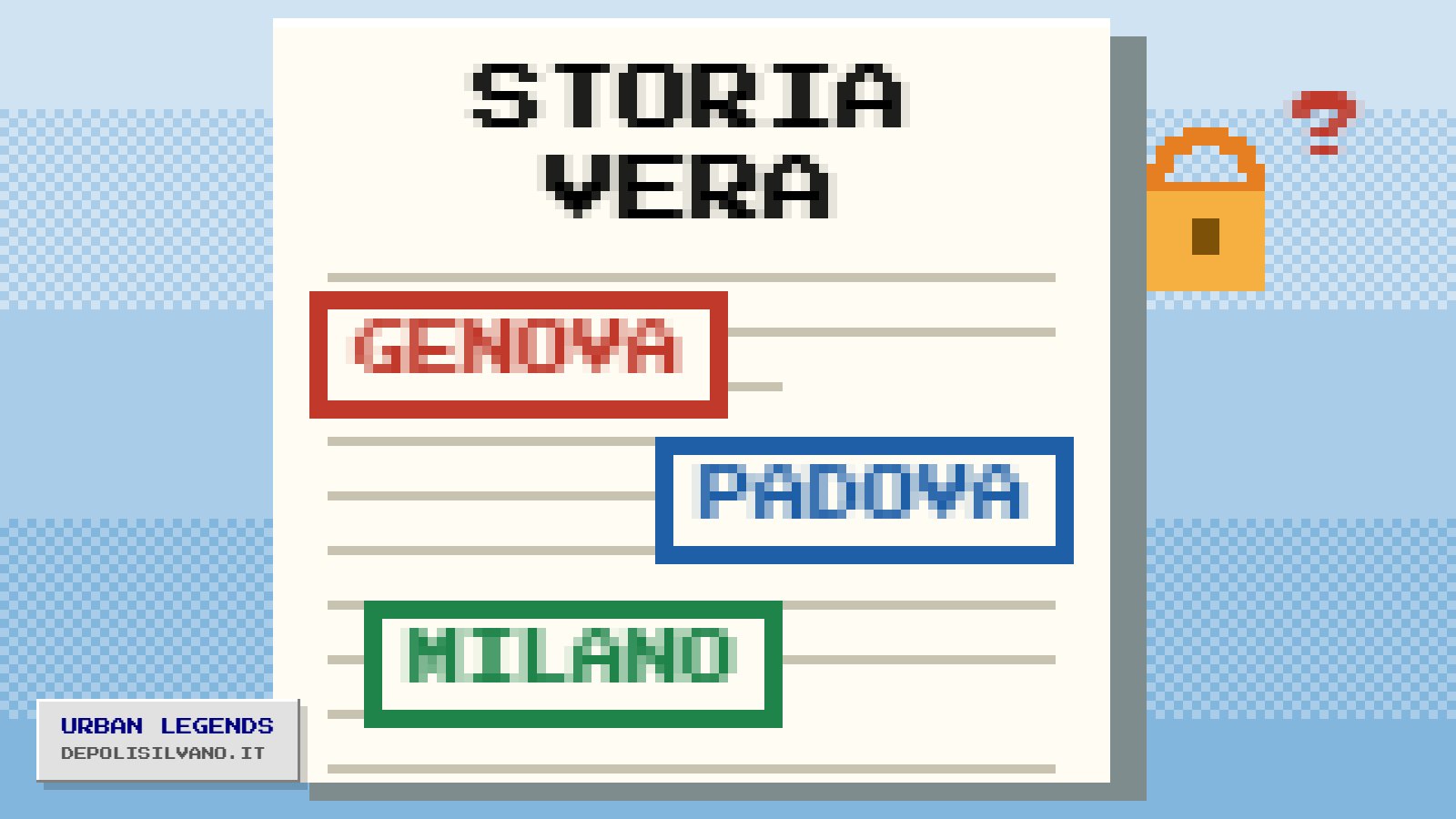
The most famous exam stories have one curious feature: at the end they always carry a note in brackets. "Heard in Genoa." "Attributed to Professor T." "Told by two lecturers of the time." It is their certificate of authenticity, and it is worth as much as a padlock drawn in felt-tip on the address bar.
The source in brackets
In IT a certificate exists to guarantee that whoever is talking to you really is who they claim to be. In university legends the certificate is a bracket: a city, a faculty, at most a lecturer's initials. Enough to seem precise, too little to be checked.
And indeed the same story arrives with different certificates. Medicine in Genoa, Engineering in Padua, Biology in Milan. It is like receiving the same file signed by three different companies: instead of reassuring you, it should set off the alarm.
The professor with initials
The recurring character is the terrible lecturer, the one who trips students up with trick questions and cutting remarks. He always has dotted initials, like an anonymous account. Every generation finds him in a different faculty, ever crueller, ever wittier.
The best part is that he probably never existed, or existed in a thousand versions. In the legend archive the copy and paste rule applies: take the professor, change the subject, update the city. The source code stays the same.
Ingenuity and observation
A classic: the chemistry lecturer walks into the lab with a jar of a liquid nobody would want to taste. He explains that a good chemist must have ingenuity and powers of observation, dips a finger in and then raises it to his mouth. He invites the students to do the same. One brave soul obliges. The professor then reveals the trick: he dipped one finger and licked another.
The lesson is sound, the story much less so: the same prank appears in films and jokes across half the world, set in labs, morgues and various lecture rooms. But it remains an excellent cybersecurity course: never run a command just because someone else ran it in front of you.
The student's comeback
Then there is the comeback subgenre. A professor who enjoys embarrassing female students poses a deliberately suggestive riddle: what is it that you have and I do not, that you know how to use and I do not? The young woman answers without batting an eyelid: a brain.
This is the version I prefer, because for once the punchline belongs to the person being examined. And it is also proof that legends, as well as deceiving, tell us something true: every environment has its abuses, and stories also serve to dream up the perfect reply that in real life always arrives three hours later, in the shower.
How to spot them
- The source is always an acquaintance of an acquaintance.
- The city changes depending on who is telling it.
- The punchline is too perfect to have been improvised.
- None of those present, strangely, can ever be traced.
None of this makes them any less fun. It just makes them what they are: corridor folklore, the students' free software, distributed at no cost and with no warranty.
Loosely based on an old piece from the teneraerbetta.it archive