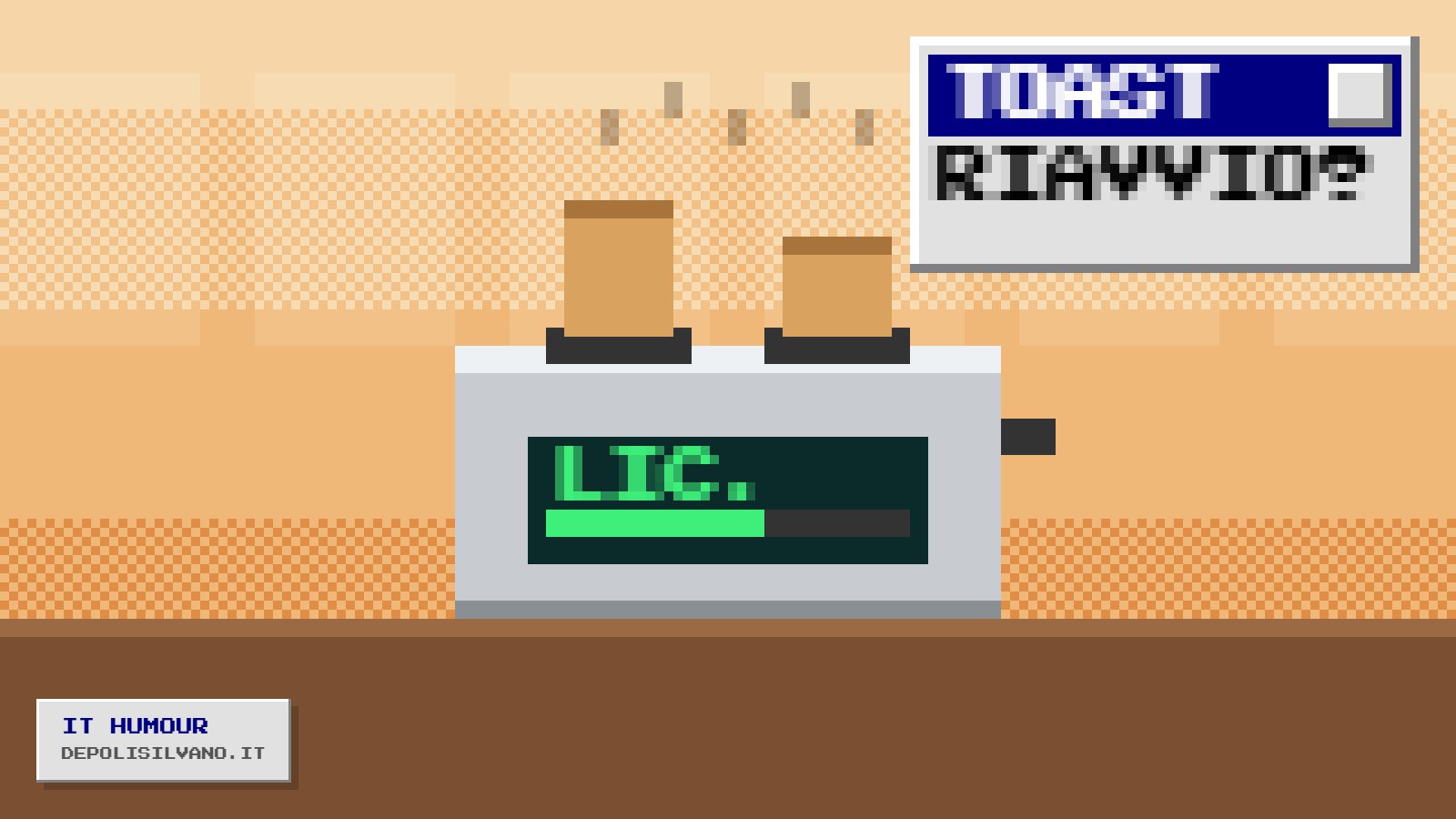
The toaster is the most honest object in the kitchen: bread goes in, toast comes out. No registration, no account, no updates. I wondered what would happen if it were designed by the tech companies. I haven't slept since. But I did take notes.
The printer company
The toaster costs nine pounds. Compatible slices, eighty-two. It only accepts genuine bread with a chip in it, and if you try the loaf from the baker round the corner it warns you that “toasting quality may be compromised”. Every so often it refuses to toast because the yellow slice has run out. You wanted plain white toast. Doesn't matter.
The operating system company
You switch it on at seven for breakfast. At one minute past seven it announces it is installing important updates: do not switch off. At nine you're still standing there, slice in hand. At half past nine it restarts, has moved the dial somewhere else and invites you to try the new Toast Assistant. All you want is the dial where it was.
The design company
Beautiful, white, a single slot and no buttons: it knows by itself when you're ready. Costs as much as an entire kitchen. It only toasts bread of the same brand, but it toasts it with a certain elegance. To replace the element you need a special screwdriver that doesn't exist, and anyway after two years it stops receiving updates and politely suggests you buy a new one. Identical, but thinner.
The social media giant
Free. Completely free. In exchange it photographs every slice, works out that you like wholemeal and from that day on the fridge shows you cereal adverts. Every piece of toast is automatically shared with your relatives, who comment “overdone”. Your toasting history cannot be deleted. Ever. In 2040 someone will dig out your burnt toast from 2026.
The cloud
The toaster is no longer in the kitchen: it's in a data centre in Ireland. You post the slice, they toast it, they post it back. Pay as you go: so much per shade of brown, a surcharge for side B. Works beautifully, until the connection drops and you're left with raw bread and a dashboard saying “all systems operational”.
The artificial intelligence start-up
You ask it for toast. It replies with absolute confidence that the best bread is toasted at 340 degrees for six minutes, citing a study that doesn't exist. Out comes a lump of charcoal. You point this out. “You're absolutely right, I apologise for the error.” Out comes another lump of charcoal, identical, but more polite.
Open source
It's free, rock solid and lasts thirty years. It isn't assembled: you receive the parts and an instructions file written by a Finnish volunteer at three in the morning. It works perfectly, but to adjust the browning you have to edit a configuration file. The community replies within six minutes: “Read the documentation.” They're right. But you were hungry.
The big consultancy firm
They don't sell you a toaster: they sell you a breakfast transformation journey. Eighteen months of analysis, four whiteboard meetings, a hundred-and-twenty-page document concluding that “adoption of a toaster should be considered”. Invoice attached.
Moral
I ran a poll among friends and family. Everyone would hate the operating-system toaster, but everyone would buy it, because everybody else has one and the slices are already that size. I remain loyal to my grandmother's: it doesn't update, doesn't connect, doesn't talk. Sometimes it burns the bread. But at least it owns up, with smoke.
Loosely based on an old piece from the teneraerbetta.it archive