Every site with a few years under its belt has its own collection of paid extensions: the sitemap, the share buttons, the bookings, the newsletter. You bought them years ago, they worked and they still work. Then one day the subscription expires, the download answers “access denied” and you discover that the site rests on five pieces nobody updates any more.
That's what I found on Runa di Odino, a Joomla site with more than seven hundred articles. In three days, from 18 to 20 November, the five extensions were replaced by made-to-measure versions, tested on Joomla 5 and Joomla 6.
The weigh-in
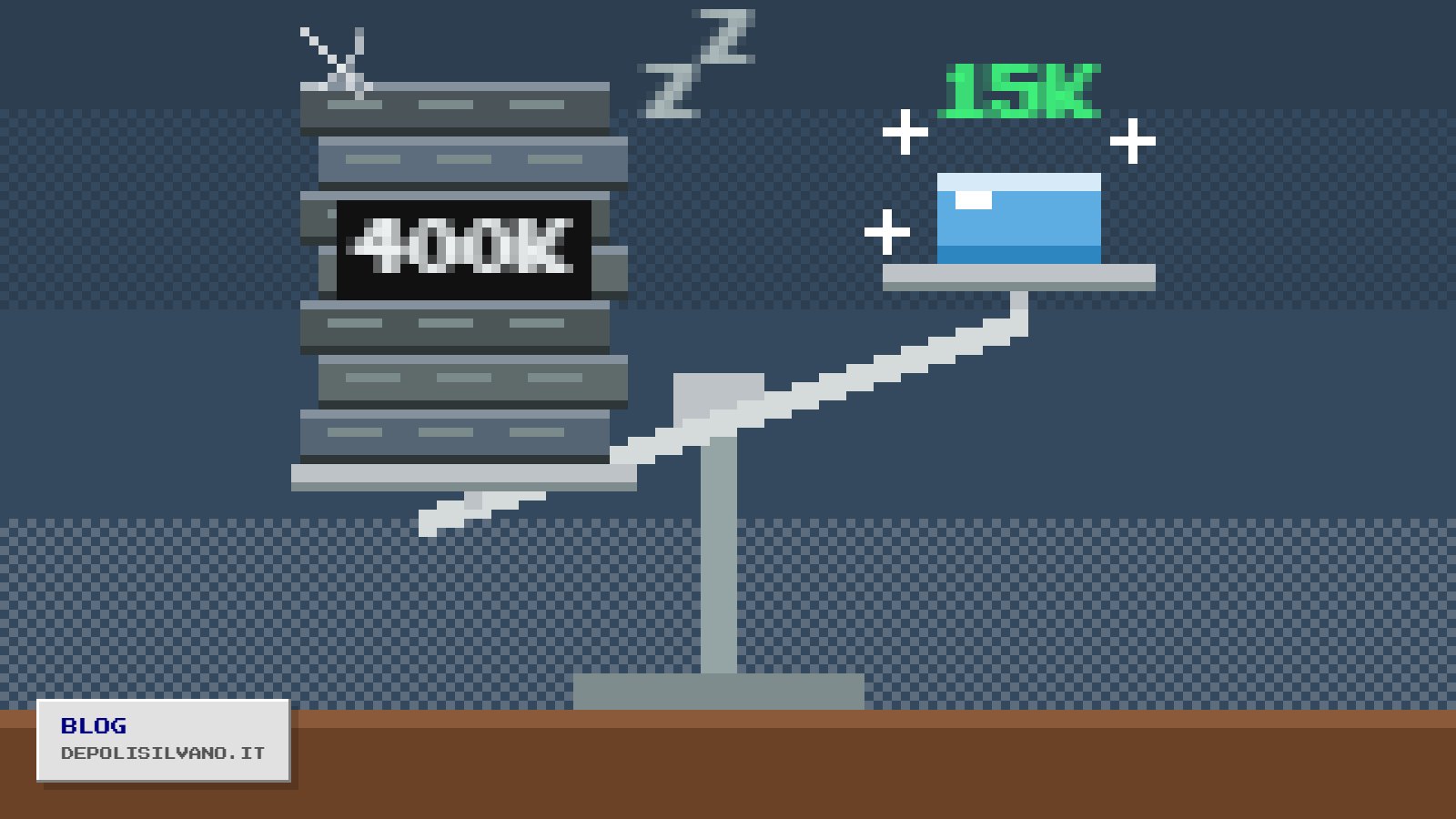
The event booking manager was a component of about 400,000 lines of code. The new one has about 15,400 and does what that site really needs: events, registrations, payments. All the data came across: 89 events and 303 sign-ups, nobody left standing outside the door.
The events page went from 69 to 49 KB and from 13 stylesheets to just one. Thirteen stylesheets for one page is like thirteen tailors for one pair of trousers: each one takes up a hem, and in the end nobody knows where the knees are any more.
- Sitemap: 721 URLs identical to before, generated in 0.18 seconds, and in 0.025 when it comes from the cache.
- Share buttons: 1.8 KB of style and 1.6 KB of code, with the history of 1,346 clicks imported.
- Social previews: all 409 customisations written over the years carried over.
- Newsletter: subscribers and back issues moved house without losing a single one.
Surprises in the old code
Rewriting also means reading what was there. In two of the old components security holes turned up: one let you inject code into the pages, the other showed anyone a list that was meant to stay private, as long as they turned up with a fake header. Abandoned software doesn't warn you: it ages quietly, like the cheese forgotten at the back of the server fridge.
And in the old newsletters, 49 messages had an “unsubscribe” link pointing to another client's site, because the template had been copied from there. Anyone who wanted to leave was politely escorted into the wrong shop.
How to make the switch without getting hurt
- The new one is installed alongside the old one, and the URLs are compared one by one.
- The data is imported with a repeatable script, not by hand.
- The way back is kept ready.
- Before removing a piece, you check who uses it.
I learnt the last rule in the field: once an old library was removed, the site went into a 500 error for a few minutes, because eight vintage plugins relied on a function that the library loaded. Once it was put back, everything sorted itself out. Old pieces hold each other up like books on a crooked shelf: take one out and you find out who was propping up whom.
When it pays
Not always. If the extension is alive, updated and does complicated things, the subscription costs less than a month of development. Rewriting pays when the site uses ten per cent of the features, the author has vanished or the code hides surprises. Then made-to-measure is lighter, safer and, above all, has a doorbell you can ring when you need it.