You open a site on your phone and, before you even see the title, you're greeted by a wall: the cookie banner. On one site I look after there were actually two banners, from two different services, one on top of the other, like two porters fighting over the same block of flats.
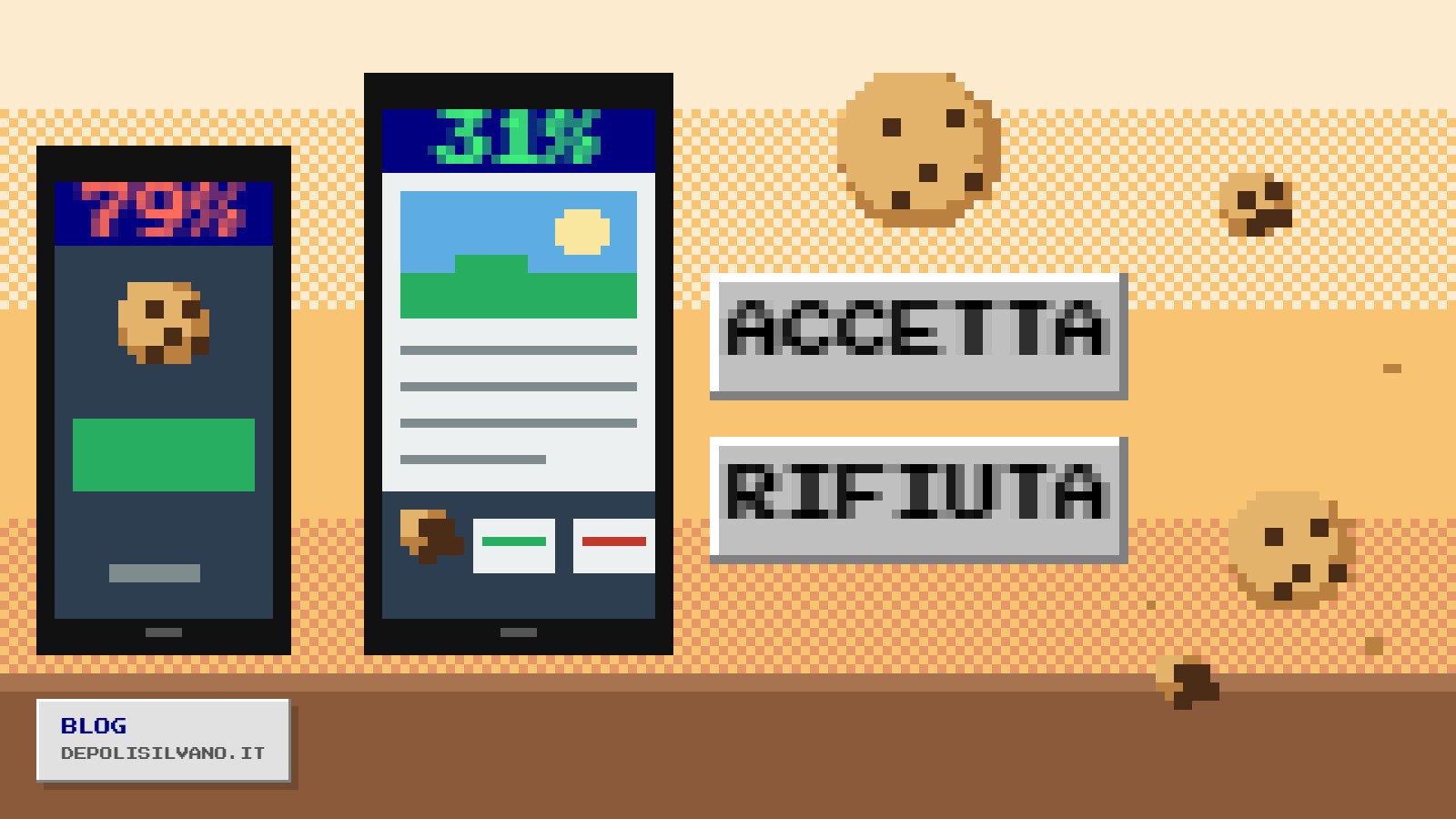
The bigger of the two covered about 79% of the screen on a mobile. The new banner, made to measure, takes up 31%. The visitor sees the site, understands where they are and decides. Which is exactly the point.
“By continuing to browse you accept”
The privacy page still carried a sentence that for years was everywhere: anyone who keeps browsing accepts cookies. Today that's no longer enough. Scrolling down a page is not consent, just as nodding in your sleep during a meeting is not approving the accounts.
The rules, put simply:
- Reject counts as much as Accept: same prominence, same number of clicks. A huge green “Accept” button and a grey “Reject” hidden in a menu are not a choice, they're a poll with only one answer.
- Closing with the X is the same as rejecting.
- You choose by category: statistics, advertising, videos, each with its own switch.
- The choice can be changed: a link always within reach, usually at the bottom of the page.
The point almost everyone skips
The banner, on its own, is stage scenery. What counts is what happens before the click. Statistics, advertising and embedded videos must not start until the visitor has said yes. I've seen beautiful banners, animations and all, while behind the scenes the statistics had already been at work for half an hour. A very polite porter, with the back door wide open.
For Google's statistics there is consent mode: without the yes, the tools receive only anonymous signals, with no cookies. It's the difference between counting the people who come in and asking each of them for their National Insurance number.
How to check it
- Open the site in a private window and don't touch the banner.
- Look at which cookies already exist (in the browser's developer tools): apart from the technical ones, there shouldn't be anything.
- Press “Reject”, reload, check again. Then try from your phone, where the banner is at its very best at covering things up.
The moral
A well-made banner is small, clear and honest, and the visitor forgets about it after two seconds. A badly made banner is a shop shutter stuck halfway: it protects nobody and sends everyone running. Cookies, incidentally, are the only thing in the computing world that asks permission before coming in. They deserve at least a decent “Reject” button.